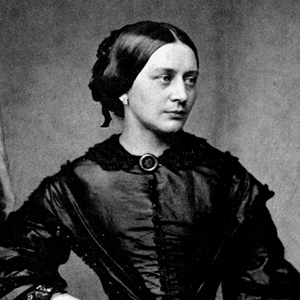
Robert Schumann’s Jump Into the Rhine – According to Clara’s Diaries

[CW: Suicide, depression, grief.]


Robert Schumann’s attempted suicide was a tragedy on many levels.

When he jumped in the Rhine, it was an inconsolable loss, not only for the musical world but for his family. Clara was six months pregnant, at the time, with their eighth child—a boy named after Felix Mendelssohn who would never meet his father.

Robert and Clara Schumann

The depths of Clara’s sorrow and pain cannot be overstated. Her diary entries are utterly devastating.

“No words can describe my feelings, only I know that I felt as if my heart had ceased to beat.”

~Clara’s diary, when she learned Robert had run away from home.

The truth about Robert’s attempt was kept from Clara for two and a half years. Until he died in the hospital at Endenich without his wedding ring. Though she’d feared he may have jumped, since he’d left her a note in his study:

“Dear Clara, I am going to throw my wedding ring into the Rhine; do the same with yours, and then the two rings will be united.”

What lead such an artist with a devoted wife and family of seven children to attempt to take his own life?

Clara’s diaries offer immense detail into the days leading up to his dramatic leap. And given her details, it clarifies the reasons for his actions. From the outside, his choice seems like an act of pure insanity, but when we learn what he suffered—given the lack of adequate medical care available at the time—his choice has logic.

Why did Robert jump in the Rhine?

Beginning Friday, February 10th, 1854, sixteen days before his attempt, Robert started having unceasing auditory and visual hallucinations. It drove him to desperation and despair. He experienced extreme depression—what at the time, they called “melancholy.”

“Robert suffered from so violent an affection of the hearing that he did not close his eyes all night. He kept hearing the same note over and over.”

~Clara’s diary, February 10th, 1854

Many have mocked this–hearing the same note over and over– but it was horrifying for Robert to experience and for Clara to witness. It lasted for days.

Robert couldn’t sleep night after night. Clara stayed up with him (even in her third trimester). She wrote that Robert experienced auditory hallucinations—one day he heard the music of Schubert. Another day full orchestral works tormented him from beginning to end. Some days he was able to write the music he heard—as in the Theme and variations in E# Major (No. 9 in the supplementary edition, says the Litzmann bio). Other days, he was in utter agony.  

Then came the visual hallucinations—angels singing to him and demons calling him a sinner that they would send to hell. Clara referred to his voices and hallucinations as “evil spirits speaking to him.” She felt terrified and helpless, “Ah! And one can do nothing to ease him!” The doctors could offer no relief from his psychiatric torture. With no treatment available, all of them, especially Robert, began to fear his hallucinations would never end.

After over two weeks of this torment, by Feb. 26th, 1854, Clara writes,

“Robert stood up and said he must have his clothes, he must go into the asylum as he no longer had his mind under control and did not know what he might end up doing in the night.”

He proceeded to pack what things he would take with him, then Clara said to him, “Robert, will you leave your wife and children?” He answered, “It will not be for long. I shall soon come back, cured.”

Robert had accepted what Clara had not—that he needed to go away. He couldn’t remain with his family. That night, he wouldn’t allow Clara to stay with him, and they called a male nurse to sit with him. But Clara writes of the next morning,

“Ah! How dreadful! Robert got up, but he was more profoundly melancholy [depressed] than words can say. If I so much as touched him, he said: ‘Ah! Clara, I am not worthy of your love.’ He said this, he whom I always look up to with the greatest, the most profound reverence… Ah! And all that I could say was of no use.”

Though he’d expressed optimism of a cure to Clara, Robert must have known his syphilis was incurable and fatal. He’d spoken of premonitions of his own death many times to Clara and to Johannes. Robert realized his choices were to either go away to a place that would likely be a “living grave” (as Clara would call it) or…

Well, we know what he did next.

The Day It Happened

Clara was meeting privately with the doctors, while their eldest daughter Marie watched over Robert with a nurse. But then, Clara writes,

“Robert ran out into the most dreadful rain, in nothing but his coat, with no boots and no waistcoat.”

Robert jumped from a bridge into the freezing river Rhine. He was recovered by a boat, but it happened very publicly when the Dusseldorf streets were full of revelers from a Mardi Gras festival. It made the newspapers. That’s how Johannes Brahms arrived so quickly after it happened—he learned of it in the Hannover papers.

How hard everyone must have worked to conceal the truth from Clara: “Where and how they found him, I could not learn,” Clara writes. She didn’t understand why she received so many notes of sympathy from people.

Perhaps she also willfully closed her ears from the unbearable truth. Clara’s denial of Robert’s declining health has been criticized as delusional by many. But consider how horrible it was for her to lose her husband and father of her children so tragically. Such an outcome would’ve been unthinkable for her to even contemplate.

The Tragedies of Treatment

The doctors decided to separate Robert and Clara. They forced Clara to leave the house and stay with a neighbor. Robert continued to request he be taken somewhere for treatment, and so a few days after his attempt, Clara watched from a window as he was ushered into a carriage.

She wasn’t allowed to say goodbye. But from somewhere, Robert found a carnation flower which he asked the doctors to give to her.

She pressed the flower in a book and kept it for decades.

The doctor’s at Endenich continued this course of treatment—separating Robert from his family—believing all references to the past might agitate him and make him worse. He was never allowed to see his children again, and he would not see Clara for 2.5 years, not until the day he died.

For the first six months, Clara wasn’t even permitted to write to him, not even to tell him about the birth of their son. He didn’t learn of Felix’s birth until four months after the fact. Johannes Brahms and Josef Joachim were allowed to visit Robert after 6 months, but Clara was forbidden.

The Myths

The doctors’ not allowing Clara to see Robert has perpetuated many harmful myths. Even though Robert’s diagnosis of syphilis was incurable at the time, falsehoods abound that somehow Clara was to blame rather than his fatal infection.

Their separation has been misinterpreted to mean that Clara caused Robert’s insanity. That after fourteen years of marriage his wife had driven him mad. That, since a wife’s duty was to care for her husband, she had been a failure as a wife.

She’s also derided for not visiting Robert in the hospital, as though it were her choice. As though she didn’t love him. As though she willfully abandoned him at the hospital and refused to bring him home. As though it was from her neglect that he died in the hospital.  

None of these things are true.

How did Robert Schumann die?

Robert had syphilis. Plain and simple. It was fatal at the time. It killed him. Two and a half years after he arrived at Endenich, he died. His official cause of death was starvation, but that was a side effect of the syphilis, which inhibits the ability to swallow food. He didn’t starve himself to death by choice, as some have suggested.

There was no cure for syphilis in the 1850s. Period.

“And so, with his departure, all my happiness is over. A new life is beginning for me… God, give me the strength to live without him.”

~Clara’s diary, the day of Robert’s funeral

Clara mourned her husband deeply. And while yes, she leaned on Johannes Brahms’s emotional support, what she valued most in the young man was how much she could talk to him of Robert, how much Johannes respected and understood her husband more than anyone else.

“I can talk to no one of Robert as I can Johannes.”

~Clara’s diary

Clara returned to concert tours four months after the birth of her last child.

For this, she is also criticized. Many people, Johannes included, wanted her to stay home and accept charity rather than support her family herself. Without Robert composing any new works or conducting, their primary household income was gone. And the cost of Robert’s medical care was exorbitant—equal to over half their household budget. She had to pay those bills.

To any suggestions of benefit concerts, she was mortified and said, “I’ll give the concerts myself.” She determined to support her children and her husband’s care. She would earn money the best, most profitable way she could—concert tours.

But it wasn’t just about the money.

A Mission For Robert’s Legacy

Every concert and performance Clara gave in countless cities across Europe, she played Schumann music. Her programs of Beethoven and Bach, only the great masters were also a continuation of her husband’s musical philosophy and legacy. As he lay dying in a hospital and she feared he would never come home, her life’s work became ensuring her husband’s name would never be forgotten. That the music of Schumann would never die.

She dedicated the rest of her life– forty years of concert tours— to cementing her husband’s place of immortality in the classical music canon.


If you or someone you know suffers from mental health struggles, please reach out for professional medical care. Unlike in Robert’s time, we now have many adequate treatments that offer help and relief.

All diary quotes are from the Grace E. Hadow translation of the Berthold Litzmann biography of Clara Schumann from 1908.

Power Imbalance in Clara Schumann’s Marriage

When Clara and Robert met, she was only 10 years old and he was 19.

They loved each other madly. There is zero doubt their affections endured without waning throughout their sixteen year marriage. And on Clara’s part– she loved him another forty years, past his death to her own. There are no signs that Clara was coerced into loving Robert or marrying him when she was young. They were fully committed for life without regrets.

But that doesn’t change the truth– Robert was nine years older than Clara, and they met when she was just a child.

Clara Wieck, age 9, a year before Robert first heard her play

Robert first heard Clara play when she was only ten and he was nineteen. He moved into her father, Frederick Wieck’s house to study piano with him when Clara was only twelve. Robert makes it very clear in his letters that he had no sexual or inappropriate feelings toward her until she was sixteen, after they’d been separated for a year. During their early years together, they spent hours daily at the piano, studying the same repertoire, taking lessons, and composing music together. They grew into mature artists side-by-side. In many ways, it was highly romantic.

But the dynamic of Robert as superior adult man and Clara as inferior girl child was built into the foundations of their relationship.

Times were different in the 19th century, we all say. Women in general married MUCH younger than they do now. Clara told Robert the story in a letter that the first time she thought of marrying him, she was fourteen. And he was 23… She was visiting his family, and Robert’s mother said to Clara, “I wonder if you’ll marry my son someday.”

Clara Wieck, age sixteen, when Robert first declared he loved her.

But this historical norm of grown men falling in love with and marrying teenage girls doesn’t change the inherent imbalance of power. Their relationship was built on Robert’s dominance over Clara in age, life experience, and gender. Even though in their musical profession she had more education, more experience as a performer, and a much more successful career, she spent most of their relationship apologizing for it.

Robert Schumann, 1839, age 29, a year before marriage

From the beginning, he was “Mr. Schumann” to her. She esteemed his opinions with similar value to her father’s, and as their relationship grew, she saw Robert as her teacher and sought his approval of her playing and work above anyone else’s.

Some examples of how this played out:

While Clara could be very critical of Robert at times, it’s clear from the start of their love declarations in her sixteenth year, she deferred to him in all things musical and personal.

In their letters, even when she did exert opinions, they were immediately followed by apologies or retractions, her begging his forgiveness for stepping out of her place. Or even promises that she would never do it again, that from then on she’d practice being a good wife for him and not give him a hard time. (Which she never actually did, thank God for her unwavering stubbornness.)

Robert did esteem her and value her playing, career and success, but from the beginning of their engagement, he decreed that as soon as they married, she should give up her performing and devote herself to wifely duties of supporting and caring for her husband. At first, they mutually agreed upon Clara giving no more than one concert a year, teaching no more than one or two lessons a day, and giving only one or two appearances at court per year.

As their betrothal letters progress, however, Robert negotiates those assertions down even further, saying that she really shouldn’t even perform one concert a year, and for the first year of their marriage, she shouldn’t teach any lessons at all. She never agrees to that in the letters, but only weakly pushes against him on the subject of money and how she could supplement their income. But she eventually gives up the fight.

Their first year of marriage, she gave no performances except in private soirees. In their marriage diary, the second month of their marriage she begs to be allowed to tour. “I must see to my career,” she says, but Robert’s responds, “I must write a symphony this winter.” And he needed her their to help him, apparently. Though how exactly he needed her help is left unclear. Clara writes he disappeared into his study for weeks and almost never came out until he’d finished the symphony.

She wasn’t allowed to practice or play the piano because it would disturb his composing. His work always taking precedence over hers. She could only steal a few hours to practice on the evenings he went to the pub.

Throughout their marriage, Clara would perform only a handful of concerts per year, but usually only in the town where they were living: Leipzig, Dresden, or Dusseldorf. She all but stopped touring.

Clara took only one solo tour, during their marriage– a one month trip to Copenhagen. But Robert wrote he was so miserable during her absence and unable to compose without her at home to care for him, she never travelled without him again. To be fair, she writes that the decision was mutual because she was miserable on the tour without him too. Though it’s also clear she enjoyed touring very much and had missed it. Clara took great pride in how much money she made on the tour.

The Schumanns around 1850, married ten years

For as few performances as she gave during those years, they often created discord. Robert’s symphonies were often performed or premiered on the same concerts as Clara would perform a concerto. Partly because her name on the program would ensure tickets sold when Robert’s name did not, and partly because it was more acceptable as wife for her to perform in service to her husband’s work.

Often more praise was given to her performance in reviews than his symphonies. She always protested and insisted the public should’ve valued Robert’s work and presence more—which was absolutely true. She believed in his work and was furious at the lack of recognition and respect he received.

She would devalue her own achievements in favor of his pride.

There are countless other examples that I’ll share some other time. On the subject of Clara as a composer, Robert made sure she knew her abilities were inferior to his as mere women’s work. (I’ll explore that more in another post about her composing.)

Robert also heavily influenced Clara’s playing style and musical choices, and when faced with his severe criticism, she would work to please him. I suppose his critique did result in change for the better, but that she was hurt by the harsh delivery of his criticism is evident in her diaries.

Robert valued her, certainly. He loved her, absolutely. But within their relationship, she constantly lived in a place of inferiority.

Sources:

  • The Complete Correspondence of Robert and Clara Schumann, edited by Eva Weissweiler, translated by Hildegard Fritsch and Ronald L. Crawford.
  • Berthold Litzmann biography of Clara Schumann published in 1906, translated into English and abridged version.
  • The Marriage Diary of Robert and Clara Schumann

Were There Queer People in Clara Schumann’s Life?

It’s pride month! So I can’t help digging into this question. And the answer is one giant YES! There was so much queer in Clara Schumann’s life– starting with her own husband!


1) Robert Schumann was probably bisexual.

We’ll never know for sure, but the Peter Ostwald bio has a quote from a letter Mendelssohn wrote to Robert, warning him for spending too much time with his friend Bennet. People were beginning to talk.

Also, the Judith Cherniak bio notes a quote from Robert’s diary. While travelling to Italy, he had an encounter with a “pederast.”

There are more cases where Robert writes effusively about close male friends in his diaries and letters. And then, there are the notes about Johannes Brahms in Clara’s diary.

In 1853, after Johannes’s arrival, Clara’s diary (as quoted in the Litzmann bio) reads:

“Oct. 10th: Brahms was with us this evening (I always call him Robert’s Johannes).”

“Oct. 30th: Brahms will soon leave us, which gives us real pain, Robert loves him and takes great pleasure in him, both as man and artist.”

Fast forward a bit to Feb. 24th 1855. Johannes wrote Clara a detailed description of his visit to Robert in the hospital. The last page describes the farewell with Robert.

“I left him on the Endenich Road. He hugged and kissed me tenderly, and on parting sent greetings to you alone…”

We’ll never know for sure, but in the mission to combat bi-erasure in history, it’s important to at least mention the possibility that Robert was attracted to more than just women.

2. Was the love triangle a polycule?

As in, was it really a love triangle? Or were Clara-Johannes-Robert all one big love fest in a poly group?

All three of them write of being in love with each other at various times. Johannes writes in letters to Robert, while he’s in the hospital, how he loved both him and his wife. Clara was definitely in love with Johannes on some level—hard to say just how intimately, but it’s possible.

And with that possibility comes the big fat truth. If all three of them really were in love with each other—that’s polyamory. Yes, Clara Schumann may in fact have been polyamorous.

3. Clara’s best friends in Dusseldorf, Rosalie Leser and “her Elise” were lifelong companions.

Clara took sea bathing cures with the couple for many summers. She visited them on Christmases. They were her closest women friends during her difficult years in Dusseldorf, and she maintained the friendship all her life.

4. Eugenie Schumann, Clara’s youngest daughter, may have found an example in Rosalie and Elise.

Eugenie fell in love with soprano, Marie “Fillu” Fillunger, who lived with her in her mother’s house for over a decade. Fillu moved to London amidst discord with Eugenie’s eldest sister, Marie. A few years later, Eugenie followed her and spent the rest of her life with Fillu. Eugenie and Fillu were buried side-by-side in Switzerland, alongside Marie after they re-united after the first world war.

If you want to know more, here’s a really lovely YouTube video about the love letters that survived between Fillu and Eugenie.


So that’s the short version to say YES, there was lots of queer in Clara’s life. She may have lived very traditionally as a conservative Lutheran, but her lived experience was far from straight.

How Clara Schumann Became Queen of the Piano by Age 18

Clara Wieck was intended from the cradle to be the Paganini of the piano. Before she was old enough to sit at the piano, she listened to piano lessons and her mother practicing arias and piano concertos for performances every day. As a late speaker, she took lessons for almost two years before she could utter a complete sentence at age 6.

Clara learned simple five finger exercises and melodies at age four, all the scales and key signatures and the beginnings of improvisation by age 6. Learning to read music came before she could read the alphabet or numbers, and she studied piano for 2 years before she started school.

Music became her primary language and method of expression.

Each day she had a piano lesson for an hour but wasn’t allowed to practice for more then 2-3 hours. An integral part of her daily routine was walking for an equal number of hours she practiced.

Her debut at the Leipzig Gewandhaus happened at age 9, a four-hand piano piece with another pianist. The papers reviewed her as a “young talent to watch.” That same year, she played her first Mozart concerto with a chamber orchestra.

Clara Wieck age 9

Paganini visited Leipzig. He heard Clara play her small piano compositions and was so impressed, he invited her to sit on stage with him at his concert. Seeing Paganini was Clara’s first glimpse of the dream to become a superstar. And she wanted it.

By age ten, she was performing in nearby towns and in the palace at Dresden. She played for the aging Goethe who gave her a medal and declared, “She plays with the strength of six boys.”

At age twelve, the winter of 1830, she travelled to Paris. She played for Chopin, both his compositions and her own. He was impressed and they planned a concert together, but Chopin grew sick and had to cancel the performance.

Clara Wieck age 12

When she returned home, she began studies in counterpoint and orchestration with master teachers in Leipzig and Dresden. By the next year, she wrote the first movement of her first concerto. She also wrote an orchestral overture that’s since been lost.

Between her studies, she gave extensive concerts throughout Germany with performances in Berlin and Hamburg etc. In every town, she played for royal palaces and at soirees for the rich and artistically influential.

Mendelssohn arrived in Leipzig, and Clara became a favorite pianist of his. She regularly appeared in concerts with his orchestra at the Gewandhaus—including premiering some of his works and performing Beethoven’s Choral Fantasy.

During her fifteenth year, she finished her concerto and its orchestrations, and a month after her 16th birthday, premiered it with Mendelssohn conducting at the Gewandhaus.

Clara Wieck, age 16

A month after Clara turned 18, she set off for Prague where she gave concerts to rave reviews. In Vienna, she was an immediate smashing success from her first soiree. Competition for tickets to her concerts caused riots in the streets. The Viennese declared a “Clara War,” and the debate on everyone’s lips: “Who is better? Wieck, Thalberg, or Liszt?”

There was even a dessert named after her: Torte a la Wieck. Franz Grillparzer wrote his famous poem about her, “Clara Wieck and Beethoven,” that made international papers.

Clara Wieck, unfinished portrait painted in Vienna, 1838, age 18

Clara played repeatedly at the Hapsburg Palace for the Emperor and Empress. She became such a favorite of the Empress that rumors abounded Clara would be made Honorary Court Virtuoso. Though it was presumed impossible since Clara was a North German protestant and the Austrian court was Catholic.

But it happened—the first protestant, youngest person ever, and the first woman to be named Honorary Court Virtuoso to the Austrian Imperial Court. It made her honorary Viennese.

The critics across the land dubbed her the reigning Queen of the Piano.

Why Is Clara Schumann Important?

Clara Schumann (1819-1896), the Queen of the Piano, the Priestess of Art, was a powerful force in classical music’s Romantic Era. Her career as a composer and pianist shaped the piano repertoire as we know it and influenced the most prominent European musicians of the mid to late 19th century.

Today, she’s most famous as the wife of Robert Schumann and the love of Johannes Brahms’s life. But her role as inspiration and infatuation for two of history’s most romantic composers is the veil over her formidable legacy. The classical musical canon as we known it would be highly altered if not for her tireless career and authoritative taste.

For most of their lifetimes, Clara, the touring virtuosa, was more famous than either Robert or Johannes. The artistic partner and facilitator throughout the careers of both men, her promotion of their work was the vehicle for their success.

Who was Clara Schumann?

One of the greatest pianists and composers of the 19th century, she played a considerable role in the living on of Beethoven’s sonatas, Bach’s Well-Tempered Klavier, as well as Chopin and Mendelssohn’s piano works. She had one of the longest performing and touring careers in history–over 60 years. Her career as a pianist was only rivalled by Franz Liszt, and hers was three times longer and far more influential on the lasting repertoire.

Clara toured Europe from the age of ten, giving dozens of concerts across the continent every year. Between 1828-1889, her performances numbered in the thousands with sold out performances from London to Paris, from Vienna to Berlin, from Copenhagen to St. Petersburg. She used her concerts to shape the tastes and values and choices of what music lived on in the public’s memory.

In short, there is a lot of music we would not know today if it wasn’t for her.

Childhood and Education

Born in 1819, Clara Wieck was extensively educated in piano and composition from the age of six by a father who didn’t care about the gender of his first child. Fredrich Wieck planned for her to be a great, money-making prodigy before she was born. At the age of nine, she performed her early compositions for Paganini who was so impressed, he invited her to share the stage with him. She published her first opus of piano pieces at age ten. Then next year, she was given a medal by the playwright, Goethe who said, “She plays with the strength of six boys.”

At age twelve, she toured to Paris and met Fredrich Chopin, and composed five more opuses of virtuoso piano pieces, on par with Chopin and influenced by him, but in her own style. She was the first to play his “unplayable” La ci darem la mano Variations and the first to perform full concertos from memory in Germany. By age sixteen, she was a favorite pianist of Felix Mendelssohn, who conducted the premier of her Piano Concerto the next year.

That’s right. She composed a piano concert on original themes and wrote her own orchestrations to be performed at the Leipzig Gewandhaus at the age of sixteen. She composed the entire third movement first, at the age of thirteen, studying orchestration and counterpoint from the age of twelve. She finished the concerto the summer before her sixteenth birthday and premiered it the month after.

The concerto was a smashing success on her tours to Vienna and Prague. At the age of eighteen, she was named Honorary Court Virtuoso to the Austrian Imperial Court, a title never before given to a protestant, a young person, or a woman.

She was dubbed Queen of the Piano and was in line to be the next Mozart. But despite being better educated than either Robert or Johannes, something happened.

Robert Schumann

Robert Schumann, that’s the short and the long answer. He moved into the Wieck house to study piano with her father when Clara was just twelve years old. Having grown up as little more than a commodity to her father who separated her from her mother at just five years old, Clara was desperate for love and attention, a girl who spent little time with friends and never had a real childhood. Their relationship began on a solid imbalance of power.

Robert doted on her, telling her stories, making her laugh, and generally making her feel like a human being instead of just a piano performer for the first time in her life. At age thirteen, his mother said to her, “I wonder if you’ll marry my son someday.” By the age of fourteen, she was in love with him. And despite him being nine years old, when she was sixteen and he was twenty-five, he declared his love for her too. They became engaged in secret.

So even though she was touring and having a rigorously successful career, in private she was just a normal teenager, writing love letters late at night behind her father’s back. Robert loved her and saw her as a woman and a person the way her father never had, he was very prideful and Clara knew it. He criticized her concerto in his journal and allowed it to be reviewed as a “lady’s work.” He encouraged her to stop performing it, so despite its success, after other reviewed it as a “lady’s work” too, she gave up composing for orchestra. She gave into the beliefs of the society around her that women weren’t supposed to be composers, but she didn’t stop composing.

Her opus 8 and 9 are sets of variations on par with Chopin’s and Liszt’s most virtuosic works. Her opus 10 Scherzo is a lightning fast crowd pleaser. But her opus 11, her first set of Romanzes, are her first truly romantical works that start to foreshadow the intimacy of Johannes Brahms’s late intermezzos and the thick textures of Rachmaninoff.

When Clara’s father disowned her for her engagement to Robert, she attempted a solo tour of Paris, where she met with success from many who called her “the 2nd Liszt.” But the conservatoire refused to let her play because she was a woman alone without a man to advocate for her. She needed a husband if she wanted to succeed in the world without her father. Clara also wanted a break from her famous, tiring touring life, to be a normal woman with a husband and children.

Robert sued the court for Clara’s hand. Friedrich Wieck insisted Robert was an alcoholic libertine who was too poor to support a family and insisted he would ruin Clara’s career. But in 1840, Clara married Robert for love anyway.

At the age of twenty-one, she believed in Robert’s compositions more than her own (neglecting to remember he was nine years older than her), and devoted herself to supporting Robert’s work. She was forbidden to play piano during the day because it disturbed Robert’s composing.

But somehow, during the next ten years, Clara still composed a remarkable Piano Sonata in the style of Beethoven, a catalogue of Lieder that are some of the best in the repertoire, and a Piano Trio equal to those of Brahms and Mendelssohn (with superior counterpoint to her husband’s). Her extensive fugal studies lead her to write her opus 16 Preludes and Fugues, on par with the best of Bach. But all with her own distinct compositional voice. Her works compare to the those in the canon, and yet are unlike them in a very unique way. No one wrote music like Clara Schumann.

She performed enough concerts during marriage to keep her career alive and make money to support their household income, but her composing and performing were curbed by her husband’s declining health and the birth and care of their eight children. She took care of all household and family matters, enabling Robert to devote himself to composing. She acted as Robert’s assistant, helping to edit all his music and transcribing all the piano reductions of his orchestral scores.

Tragedy and Brahms

Her final year with Robert, in Dusseldorf, they finally could afford an apartment where Clara had her own study to compose in. Her last three opus are thanks to this gift: her opus 20 variations on a theme of Robert’s built on the inspiration of Mendelssohn’s Variations Serieuses, her most harmonically advanced opus 21 Romanzes for piano, her opus 22 Romanzes for violin and piano written for Josef Joachim, and her opus 23 song cycle on poems by political poet, Rollett.

In October of 1853, 20 year old Johannes Brahms knocked on Clara’s door, a great story with its own blog post. Five months later, tragedy struck. Robert’s health had been failing for years with an inexplicable nervous condition that resulted in cycles of hallucinations and debilitating melancholy. (He was dying of syphilis, though it’s doubtful Clara ever knew this.) February 1854, (Clara was five months pregnant with her last child), after ten days of unceasing hallucinations, Robert attempted suicide by jumping in the freezing river Rhine. He couldn’t swim.

Though he was rescued, he was taken to a sanitorium where Clara was not permitted to see him for 2.5 years, until the day he died there.

But two remarkable things came out of this tragedy:

One, despite how greatly Clara grieved her husband, she was now free of the burdens of child bearing and caring for a husband. She resumed her touring career. She refused charity and took on the financial burden of her children and her husband’s exorbitant hospital care alone.

Two, the twenty-year-old Johannes Brahms, for love of Clara, her husband, and her children, put his life on hold and moved in. He became her primary confidante and friend, trading countless letters during her 2.5 yrs of lonely touring while fearing for her dying husband. Johannes looked after her household and family in her absence, played surrogate father to her children, and visited Robert in the hospital when she wasn’t permitted to go.

But this wasn’t a one sided arrangement. What began during these years between Johannes and Clara was far from just an undefinable personal relationship that would last the rest of their lives. It was also an intense professional partnership that would enrich both their careers immeasurably for the next forty-three years.

Clara became Johannes’s compositional mentor and piano teacher during his early years. He consulted her for opinions and input on every single one of his works. She became his number one encourager-in-chief, since Johannes’s biggest obstacle was his own insecurity. When she had too many offers for performances, she gave him all the gigs she couldn’t accept, including students, concerts, and court appointments.

During those early years of Johannes’s career, when all the critics were against him and the world mocked him for being “Robert’s Messiah,” Clara was the constant voice begging him to write more. She loved and depended on his work.

Whether she also loved the man as more than a friend and surrogate family member is a mystery we will never know.

The Rebirth of a Career

After the loss of Robert, Clara remade herself once more and entered the most rigorous decades of her career. Though it’s the part of her life least talked of today, the next forty years were Clara’s most influential on music history. From 1854, Clara matured from the piano prodigy queen into what Liszt and Brahms restyled her as, “The Priestess of the Piano.” Her concerts took on the tone of religious experiences, where she preached the legacy of the greats from the piano keys.

She cemented the standard piano repertoire, the first to devote her career to the canon works we take for granted – Beethoven, Bach, Mendelssohn, Chopin, and Robert Schumann with some Scarlatti, Schubert, and Mozart thrown in. Her influence expanded far beyond the concert stage. In every town and city, she played at palaces for royalty and gave soirees of Robert and Johannes’s music to the most prominent artistic circles. The respect she commanded made her opinions and tastes gospel among the musical elite. She devoted herself to the works of the great composers with a monastic fervor, on a mission to negate the New German School of Franz Liszt and Richard Wagner which proclaimed the music of the greats to be dead.

She toured England with her eldest daughter Marie no less than sixteen times. She made numerous more tours to Vienna, and to Paris and Russia. She received at least three offers to tour America, though never accepted on the account of not wanting to be separated from her children for a year.

Her Later Years

But Clara endured further tragedies with her adult children. She was forced to commit her eldest son, Ludwig to an asylum for life. Felix and Julie died of tuberculosis in the 1870s, and Ferdinand died a decade later of a morphine addiction, begun from injuries he sustained as a soldier in the Franco-Prussian War.

Throughout these difficult years, Johannes remained a source of constant support. When Ferdinand’s six children fell under sixty-nine year old Clara’s financial care, Johannes, now rich with his success, gifted her a sizeable sum to invest in their future.

But Clara’s daughters, Marie, Elise, and Eugenie all became renowned piano teachers in their own right. Clara gave lessons to countless students throughout her career and joined the faculty of the Frankfort conservatory for the last two decades of her life. Her influence on piano pedagogy and students who went on to have successful careers is incalculable.

Even though Johannes and Clara never lived in the same city again after 1856, they spent half their summers together, performed countless concerts together, and visited each other multiple times a years. Though Clara always insisted they were friends, she endured salacious slander over the nature of their close relationship. (Rumors that she was unfaithful to her husband during his hospitalization still chase her today, though are MOST likely very untrue.) Johannes and Clara exchanged volumes of letters up until her death, and she would forever be the inspiration, motivation, and most ardent consumer of his compositions. Throughout his life, Johannes mailed first drafts of all his work to her for her approval before sending them to the publishers.

In her last years, Clara’s hearing slowly deteriorated so orchestras were painful to hear, and her hands developed bad arthritis so playing piano became difficult. But still Johannes would visit her and wrote many of his intermezzos for her to play and hear.

In 1896, Clara died from a stroke at the age of 76 with Marie and Eugenie by her side.

Johannes died eleven months later.


Why Clara Schumann and Johannes Brahms never married (Or why Johannes would’ve made a terrible husband.)

Clara Schumann, 1854, and Johannes Brahms, 1853

There are countless myths around the relationship between Clara Schumann and Johannes Brahms. Some of them involve love triangles and infidelity. Most of them belittle Clara in some way, either morally, personally, or professionally. Some of them poke fun at Johannes or try to humiliate Robert. One myth even claims that Johannes dumped Clara – that she was desperately in love with him, he rejected her, and that’s why they never married.

There is a lot we will never know about Clara and Johannes’s relationship. They were very private people and destroyed like half of their letters. But over 800 letters do survive from their 43-year correspondence, from 1854-1896, along with numerous diary entries from Clara. What survives is more about music than romance; Clara was fourteen years older than him, more of a mentor than a muse.

But what do we know about Clara Schumann and Johannes Brahms’s relationship?

Was Brahms in love with Clara Schumann?

The number of times Johannes declares his love for Clara or calls her “My Beloved Clara” in letters between 1854-1856 is in the dozens. That he was in love with her is undebatable. (If you want to know about the first day Johannes met Clara, read this.)

Though while Robert was still alive, Johannes was very careful and reverential about his feelings. He most often addressed Clara in the formal German “Sie” pronoun, or declared his respect for Robert in the same letter, or wrote “in deepest friendship” after his love words. He loved her but was always very respectful of her husband too.

[If you’d like to read some early love quotes direct from Johannes’s romantic pen, I made a YouTube video of some of them.]

Was Clara Schumann in love with Brahms?

Clara’s love words for Johannes were far fewer. In all of her letters to him, she never outright declares her love for him. In her diary in 1854, she twice wrote, “I love him like a son.” This was her reasoning for allowing him to address her by her first name (because he begged her) despite her being married. She also occasionally referred to him as “my beloved friend.”

Clara loved his music. Her words of praise and affection for the manuscripts he sent her for forty years are effusive and numerous. After her husband died, he was her favorite composer. Though… she was equally critical of him. He relied on her musical praise and criticism all his life.

By her published assertions, she only loved him as a friend, composer, or surrogate son.

Was Brahms attracted to Clara Schumann?

Clara never mentions finding him physically attractive. The first day she meets him, her diary mentions his “handsome face” and “beautiful hands.” (If you want to know about the first day Clara met Johannes, read this.) They talk of hand holding. She talks of wanting “to hang on his neck” for gratitude when she loved his music.

But just as a factual FYI, Johannes was small and slight, shorter than Clara by at least six inches, and Robert had been much taller and bigger. It’s very possible that for all she cared for Johannes, she never found him attractive.

Johannes never mentions finding her attractive either. He mentions MANY TIMES wanting to kiss her or hold her hand in his early letters. And longing to “sit beside her” is a sentiment he asserted into old age. But he also mentions wanting to “set her under glass” which implies he saw her in an untouchable Virgin Mary kind of light. (But she was still married at that point so who the heck knows what that was about.)

But again, THERE IS NO PROOF of attraction on either side.

Did Brahms propose to Clara Schumann?

Yes, probably, or at least, they discussed what would become of their relationship after Robert died. In May 1856, Clara was in England touring, giving concerts while Johannes was at her home, caring for her children, trying to compose, but his frustrated letters say he missed her so damn much that composing was hard.

At this point, Robert was still alive in the hospital. But they knew he was dying and would probably be gone within a few months. It’s a little cryptic with Clara’s letter missing, but Johannes wrote to Clara on May 24th 1856:

“My idea was that I could not avail myself immediately of your kindness and love as you might regret it later on. That is why I always continued to write to you in the second person plural. I take it then that all these tactics of siege and assault had some connection with the unanswered question? Or is that not so?”

Some argue “the unanswered question” was a “marriage” question. In other words, Johannes proposed to Clara and she refused to answer him.

Why did Clara Schumann and Brahms break up after Robert died?

We don’t know.

Here are the facts: In July 1856, Robert died. Clara left behind a detail description of her last visit to Robert and his funeral, her depression at losing him, etc. But there are no letters between Clara and Johannes because they were living in her house together through October.

In August, they went to Switzerland on vacation, Clara’s diary tells us. They took along her two boys and Johannes’s sister as babysitter. We have no idea what happened there.

In September, Clara took her two sons to boarding school. Johannes had spent a lot of time playing with them while he was living with her. They’d been his favorites and he’d felt a responsibility to them as a surrogate father in Robert’s absence. Perhaps one of the reasons he left in October was because her sons were no longer there. Or it was vice versa, Clara took them to boarding school because Johannes was moving out. Clara’s diary says she planned to tour Copenhagen and England that year.

In October, Johannes finished his concerto. Clara’s diary says that they played it together. Then on October 21st, the day Johannes moved out, her diary says:

“Johannes left. I went to the station with him—as I came back I felt as if I were returning from a funeral.”

This is the quote people take out of context and point to when they say “See! She wanted to marry him and he refused her!” Did she say she wanted to marry him? No. Did she say she wanted him to stay and he refused? No.

The quote does reference her husband’s funeral two months prior. Saying goodbye to Johannes was hard. She says this in letters many times over the years.

That same week, she left for Copenhagen to give concerts. He left because she was leaving. She wasn’t even home. She was not pining for him and sad they didn’t get married. She was not even depressed that she had to give concerts. She looked forward to her tours as she always did.

Johannes came back for Christmas. From 1854-1858, he spent every Christmas with her and her boys, because he knew it would be hard for them all without Robert.

Most likely, they mutually decided marriage wasn’t an option. Or maybe it never really was. There were many practical reasons why marriage made zero sense for either of them.

Marriage was a horrible idea.

Clara had three MAJOR reasons for never marrying again, not anyone, even Johannes.

1. She didn’t want more children. In 1847, when she found out she was pregnant with child number five at age 27, she writes, “What will become of my work?!” (Yes, that exclamation point and question mark are in the text.) Robert’s response she writes, “Children are blessings.” It’s pretty easy to infer that after child number four, she’d had enough and that Robert refused to take precautions against having more. She still birthed 4 more children after she’d had enough. That she was relieved to have no more children after Robert went into the hospital is evident simply by her touring schedule. She relished the freedom, even as she mourned her husband. Having more children was a non-option. She could barely take care of the seven she had.

2. Money. Clara was always practical and money conscious because of her father. She spent lots of time in her betrothal letters to Robert worried about him making enough money for them to marry. It was her father’s primary objection to their marriage. She made LOTS OF IT by touring. Her concerts pulled in enough for her to put all her children in boarding school and for her to buy a house in the mountains. She LOVED financial stability.

Johannes had no money. He was a dirt poor composer who would spend money as soon as he earned it. He carried his cash around in his pockets. Clara begged him in the 1860s to let her invest it for him in government bonds, which he did. She was his financial adviser until he reached his 40s. He never could’ve supported her family.

3. Her career. Clara’s performing career was epic. She wasn’t giving up her touring for anyone, ever again. She’d given it up for Robert. Every year, Johannes told her in letters not to tour so much. She never listened, and frequently fought him for saying so. Johannes or any man she married would’ve curbed her career and demanded she stay home. Which was a non-starter for her.

Why Johannes Brahms Never Married

Johannes had reasons for not marrying too. He composed best when he lived alone. It took him a number of years to fully realize this. It became clearer and clearer as he got older. It grieved him to be so alone, but the number one for him was always his music. Period.

Clara knew this. She knew that living in her house with her children had inhibited his ability to compose. She was a composer too. What’s also a very real possibility, she realized perhaps sooner than he did, that for him to realize his potential as a composer, he couldn’t live with a wife and children. She wanted his symphonies and music above even her feelings for him. Art as a calling from God and all that. The pressure on Robert to make enough money with his composing to support their family, she believed, was one of the reasons he went mad and died. She didn’t want the same thing to happen to Johannes.

The Romantics, especially the Schumanns and Brahms, regarded their art as religion. Brahms and Liszt referred to Clara as a priestess in 1854. Johannes and Clara likely also chose to never marry simply as a monastic devotion to their art. Johannes Brahms never married. He never had children. He was lonely but his music always meant more to him.

Johannes Brahms Would’ve Made A Terrible Husband

I know most of us love Johannes’s love letters to Clara, but for many reasons, as a husband, he probably would’ve been as bad or worse than Robert.

1. Johannes had an arrogant mean streak and a nasty temper. He knew how to cut down people closest to him with his keen intelligence in the most hurtful ways. Clara mentions it in later letter and her diaries, how he would criticize her playing much in the same way Robert had. By the end of his life, he had very few friends. Clara was the only one who stood by him despite his capacity to insult everyone.

2. Johannes tried to control her career too. From 1855, when Robert was in the hospital, Johannes tried to stop her touring. And all through their lives, he was always telling her to give it up and settle down in a town somewhere with him, either in Vienna or Leipzig. Which she refused to do until she turned seventy, and then she picked Frankfurt.

3. Johannes was kind of an alcoholic and a cigar chain smoker. To be fair, most men were at that time and Robert loved to have too much beer and cigars too. But this was yet another reason for Clara not to ever marry again. Johannes spent half his life in pubs and brothels. I’m not exaggerating. He was out most nights. His years in Vienna, he took all his meals at the pubs. He practically lived there, except when he was composing. And he definitely had a real serious thing for sex workers. I’m sure he tried to cover it up, but Clara wasn’t stupid.

Did Brahms have a relationship with Clara Schumann?

In conclusion, there is too much MISSING INFORMATION for us to know what officially happened between Clara Schumann and Johannes Brahms. The two composers had a 40-year professional friendship that was mostly about their mutual love of music and their intertwined careers. We have two volumes of letters that show they deeply cared about each other. But just as many letters were burned by her or dropped in the river by him. Less than half of Clara’s diaries were published before they were destroyed. 40 years is a lot of time for a relationship to eb and flow or grow and fade.

But Clara was not the woman scorned. Clara dealt with an inordinate amount of vicious slander for her close relationship with Johannes, both in her lifetime and into the twentieth century which continues today. This slander is one-sided. Johannes endured, neither in the past or now, no such judgement. The short answer to why they never married was not because Clara was the guilty party or that Johannes was the one who rejected her.

The most likely answer, there were plenty of reasons on both sides.

For Further Reading on Clara Schumann

What are my research sources?

Here’s a compilation of the sources I use for most of my tweets, posts, videos, etc. It’s not exhaustive as I’ve read more articles than I can remember. They’re not listed in alphabetic order (sorry librarians!), but in order of how frequently I use them or how relevant they are to most of my research. The first being the most used!

Nancy B. Reich biography

Clara Schumann: The Artist and the Woman

by Nancy B. Reich

My number one recommended read for anyone wanting to know more about Clara is Nancy B Riech. This biography is the first book I read about Clara back in undergrad in 2004. It’s the book that founded my love and fascination for this extraordinary woman. When it was published in the 1980s, its groundbreaking scholarship inspired the resurgence of knowledge, respect, and popularity of Clara Schumann after decades of neglecting her as but an afterthought in the lives of Robert and Johannes.

Originally published in English, there was a revised edition published in 2001.

Litzmann biography

Clara Schumann: An Artist’s Life Based on Material Found in Diaries and Letters – Vol I & II (1908)

By Berthold Litzmann, translated into English by Grace E. Hadow (1913)

This one is for the advanced, and it’s my FAVORITE! For everyone so obsessed you just can’t get enough of Clara and want to take it to the next level. It’s the ORIGINAL Clara bio whose publication was overseen by Marie Schumann (Clara’s eldest daughter in charge of her legacy), released in German a decade after Clara’s death by Breitkopf & Hartel (Clara and Robert’s lifelong music publisher in Leipzig). It’s three volumes of over 1500 pages filled to the brim with original quotes from Clara’s diaries and correspondence.

Note of caution: It is a book of its time. Read it knowing its a pre-women’s suffrage publication with a clear agenda to place Clara in the traditional role of dutiful wife, mother, and muse. Despite that, somehow it manages to also show the power of Clara’s career and the ambition behind her achievements. But clearly relegates her composing to a position of lesser importance. Be sure to read it with a wide lens of historical context.

This is the closest we’ll get to reading those diaries, since Clara’s 20-some volumes of diaries were lost (presumably destroyed by Marie). This biography itself was overseen so closely by Marie that it’s decidedly biased toward an agenda of portraying Clara in the best possible light. But there are too many extensive diary and letter quotes to ever fit in a modern biography. It is as close to an insight into the mind of Clara and her intimate day to day life as we’ll ever get.

There’s also so much information on Robert and Johannes, it reads almost like a triple bio, and also like a who’s who for every famous artist in 19th century Europe. Clara knew and had stories about EVERYONE. As you can tell, I love this one.

Sadly, the English translation, which I’ve read at least three times, has been abridged into only two volumes. It’s still over 1000 pages, but there is still a whole volume of untranslated info which I’ve never read. *Sob!* But this translation was overseen by Eugenie Schumann, Clara’s youngest daughter in London, and published in 1913 by Macmillan.

It’s available in ebook for less than $8! If you’d prefer to jump straight to volume 2, which starts in 1853 when Brahms arrives, uh-huh, here’s that link. (Psst! I literally have these in ebook on my Kindle app on my phone, and I use the search function whenever I need fast reference for my daily tweet digests. Now you know my secret!)

Now onto the letters and diaries!

The letters of Clara Schumann and Johannes Brahms

The Letters of Clara Schumann and Johannes Brahms Vol. 1 & 2 (1927)

Edited by Berthold Litzmann, translated into English 1973

This is the one everyone wants and sadly the hardest to get. Though beware, it abridges the German publication by HALF and has a clear agenda to prioritize the minimal number of love quotes above Clara and Johannes’s professional relationship. The complete German has twice as many letters and far far far more talk of music, Johannes’s composing, and both their careers.

It is with deepest regret that I must inform you these two volumes are out of print, and there is no digital book available, that I’ve found. I do not own one (though I’ve copied a PDF, hehe). But there are many academic libraries with copies. Mine has two in English and one in the original German.

The publication was again directly overseen by Marie Schumann in the 1920s who severely edited and abridged the letters. Clara and Johannes themselves destroyed over half of their correspondence before they died. So it is by no means complete, but still two volumes worth survived, hundreds of letters from over 43 years. It is a fascinating read, if you can get your hands on a copy… An absolute delight.

(Predictably, I’ve used countless quotes from these volumes in my novel manuscript—as chapter epithets, hopefully. If copyright will allow!)

Clara and Robert Schumann’s letters

The Complete Correspondence of Clara and Robert Schumann Vol 1 & 2

Edited by Eva Weissweiler, translated by Hildegard Fritsch & Ronald L. Crawford

These are complete. This English publication boasts of being unabridged, and there’s no mention anywhere of Marie nor Clara nor Robert destroying any of the letters between Robert & Clara. That said, they’re difficult for me to read. Some of it is lovely and sweet and all of it is fascinating and enlightening, but it’s also a detailed transformation of young Clara from successful independent virtuosa into acceptance of sacrificing her career to be a wife.(Disclaimer: At this time, I’ve still only read volume one. I have it on purchase order from my library. Fingers crossed it comes in soon!) The letters are still full of beautiful love declarations and the passionate hearts of these two great romantics falling in love. Parts of it are heart-stoppingly beautiful.

Marriage Diary of Robert & Clara Schumann

The Marriage Diaries of Robert & Clara Schumann

If the above letters are difficult to read, this one outright makes me sick to my stomach. I have no desire to read it again, and I hope I never have to. It was published and kept as a testament to the love of the young iconic couple in their first three years of marriage. At Robert’s directive, he and Clara passed the diary back and forth each week for three years, alternating entries. I suppose parts of it can be seen as romantic, but most of what I read is a woman living a life of subservience, displacing her own needs and desires to care for her family in a way that’s “lovingly” enforced by her husband.

Johannes Brahms: Life and Letters

Johannes Brahms: Life and Letters by Styra Avins

If you can’t get your hands on the full Clara & Johannes letter volumes, this is the next best thing. My local public library even has one. It includes the highlights of Clara and Johannes’s letters in a more modern translation than the Litzmann. It also reads like a bio with lots of annotations and has lots of other letters that Johannes wrote to other people. Including, most particularly, the very first time he declared his love for Clara in a letter to Josef Joachim. 😉

The Memoirs of Eugenie Schumann

The Schumanns and Johannes Brahms: The Memoirs of Eugenie Schumann

by Eugenie Schumann

Eugenie, the Schumann’s youngest daughter, wrote a memoir late in life. It’s in the public domain and you can read it here. She led a very successful career as a piano teacher in London with her life partner, soprano, Marie Filunger. Her memoir reminisces extensively on her mother and devotes a whole chapter to her recollections of living with Johannes in the Schumann house, her piano lessons with him, and his last visits to Clara before her death. I enjoyed this one very much. Eugenie is so great, and she honestly deserves her own novel!  

Other biographies:

Johannes Brahms by Jan Swafford

Johannes Brahms: A Biography by Jan Swafford

This bio of Brahms has so much information about Clara it almost reads like a dual bio. While I don’t always agree with how he interprets Clara’s actions (generally from the point-of-view of Johannes, understandably), it presents a much more pragmatic and detailed view of their relationship than any other publication I’ve read. It’s well researched and written in an entertainingly narrative form. It’s a door stopper but so engaging it reads like a novel. (I have high aspirations of writing a bio for Clara of this narrative length and quality…maybe someday!)

Robert Schumann: The Faces and the Masks

Robert Schuman: The Faces and the Masks by Judith Chernaik

This is the most recently published English language bio of Robert. It’s fascinating and well written, though I do have some objections to it. The biographer isn’t a professional musician, so it’s nothing like the comprehensive Swafford bio above with the composer’s analysis. It also tends to just deliver the information rather than writing it in the storytelling readable narrative of Swafford. The treatment of Clara isn’t my favorite, again very biased to Robert’s point of view of her and often paints her as being the obstacle/burden in his life which……obviously, I don’t agree with. But, nevertheless, it has a lot of details about Robert you won’t find in the other above books.

* * *

That’s my list of major sources. By no means complete. I’ve also read countless articles on JSTOR and other academic sources. If you’ve never been to JSTOR, head over there and search for Clara Schumann. Lots of interesting, priceless details.

I’ll probably add to this later, but these are the primary books I recommend for further reading. And if you’re wondering about something that I tweet or blog which seems wild, most likely it’s from one of these. Or a combination!

Clara Schumann’s Love of Schubert

(Originally published in The Schubertian, October 2021)

It’s easy to overlook how important Franz Schubert’s music was in the life and career of Clara Schumann.

She’s most famous for championing the works of Robert Schumann and Johannes Brahms, and for being the first to cement Beethoven, Bach, Mendelssohn, and Chopin in the piano recital repertoire. But Schubert’s sonatas, chamber music, and lieder were essential parts of her repertoire, too, and his music held great personal significance to her.

Before getting into the dry repertoire lists, dates, and performances, let’s start with Clara’s love of Schubert from her earliest years. Her compositions both in piano and lieder bear the marks and influence of her Schubert studies. Clara’s diaries and letters show how the works enhanced her close relationships with Robert and Johannes, both intellectually and philosophically.

In short, Schubert was among the indispensable composers in Clara’s life.

Clara Wieck’s First Schubert

In 1837, the eighteen-year-old piano virtuosa, Clara Wieck, made a concert tour to Vienna, the first of many in her sixty-year career. She was an immediate sensation with the Viennese. They went mad for her, rioting for her concert tickets, and the proverbial “Clara War” began—“Who is better, Clara Wieck or Franz Liszt?” They even named a desert after her, torte á la Wieck. The empress dubbed her Honorary Court Virtuosa, and the music publisher Diabelli dedicated Schubert’s Grand Duo, (the Sonata in C-major for piano four-hands, D. 812) to Clara Wieck.

Clara Wieck’s name centered in a larger font than the composer shows how great Clara’s fame was – how her name sold music better than Schubert’s – and also how respect for Schubert among the public had not yet reached what we know today.

The dedication meant much to young Clara, even in her teenage years she understood the significance of such an honor. At age nine, she’d performed some of his polonaises and a piano arrangement of Die Forelle on her first concerts. The influence of his piano works shows in her earliest piano compositions, especially her waltzes of opus two, published at age thirteen.

From Vienna, after the dedication of the duo, she wrote to her then fiancée, Robert, somewhat disconcerted by her intense reaction:

“This dedication moved me very much, and I hardly know why. It’s really strange how sensitive I am now; sometimes I think that I am too sentimental.”

Robert wrote back, reassuringly, “You’re right about the dedication of Schubert’s duet…it seems gentle and poetic to me.” He then beseeched her to visit the graves of Schubert and Beethoven before leaving Vienna, and she picked violets from their graves and enclosed them in her letter to him. “I felt joy, awe, and melancholy…all the while thinking ardently of you.” She wrote out the inscription on Schubert’s grave for Robert:

“Something beautiful hath laid to rest here,

And even more beautiful hopes: Franz Schubert.”

Clara received one more gift in Vienna. A friend of the late composer bestowed on her an autograph copy of Schubert’s Erlkönig. She added it to her repertoire that year and made liberal reference to it in her lied composition, Die Lorelei, nearly ten years later.

A year later, when Clara left on her next tour, Robert’s farewell letter recalls Winterreise:

“My best wishes for your winter trip; I hope it will be very Schubertian. Adieu, dear Klara, darling fiancée. Don’t forget your, Robert.”

Schubert’s C major Symphony had special significance as well, since Robert discovered the manuscript with Ferdinand Schubert in the late composer’s old Vienna flat. While Clara gave concerts in Paris, Robert heard it for the first time in Leipzig with Mendelssohn conducting. Robert wrote her his first famous description of its “heavenly length:”

“Klara, I was blissfully happy today…If only you had been there! It’s impossible to describe [the symphony] to you… the length, the heavenly length… I was very happy and didn’t wish for anything more than for you to be my wife and for me to be able to write such symphonies too.”

Clara lamented from Paris, “The Symphony by Schubert must be unique! And I couldn’t hear it!” But she would get her wish. Two months after they were married in November of 1840, they heard it together for the first time once more in Leipzig.

Liszt’s transcriptions of Schubert’s lieder were among Clara’s favorite works by the virtuoso. They became staples of her repertoire in 1839, and she performed his solo piano arrangement of Erlkönig, Ave Maria, and Lob der Tränen on nearly every concert for over a year. She gave them over a dozen performances at soirees and concerts in Berlin and Paris and other cities in between.

The Parisians particularly liked a program where she played Lob der Tränen so well that they called her “the second Liszt.”

In September of 1840, on her last concert as Clara Wieck, two weeks before her wedding, she played Erlkönig and Ave Maria in Weimar.

During those last years of solo tours before marriage, Clara also began including Schubert’s chamber music on her private soirées—his trios in B-flat major and E-flat major—a genre of his work she would indulge in privately her whole life.

Clara Schumann’s Artistic Growth with Schubert

During her marriage, Clara’s concert tours decreased significantly, so she added little Schubert to her performance repertoire. She did compose most of her songs though, between 1841-1853, and Schubert’s influence on her lieder is vividly apparent.

Her high standards and artistic opinions show in a diary reaction to her friend, French composer and mezzo-soprano, Pauline Viardot’s performance of Gretchen am Spinnrade.

“She lacks deeper emotion, an intimate understanding of the text… She performed more for its effect on the audience than with that inner glow expressed so magnificently by the words as well as Schubert’s music… with this German lied she left me unsatisfied.”

Clara admired Viardot highly as composer, musician, and singer throughout their long lives, despite her opinions of her Schubert interpretation.

In 1854, her husband’s health declined rapidly. He wrote down a hallucinated melody from the spirit of Schubert, and shortly after, he was committed to a hospital.

In his absence, she sought comfort in music, including Schubert’s piano sonatas. Her diary notes that the Schumanns’ new friend, twenty-one-year-old Johannes Brahms played her Schubert’s A-minor sonata from memory one day in May. It made her appreciate Johannes’s young talent.

“I am filled more and more with admiration for the great spirit which inhabits so small a body.” 

The following week she writes an amusing comment on Johannes’s tempos in Schubert:

“He played Schubert’s wonderful B-flat major sonata whose first and second movements are particularly delightful… Brahms plays Schubert wonderfully especially those movements in which he cannot exaggerate the tempo which he is fond of doing.”

Clara took up major concert tours once more that same year, since her seven children were now solely dependent on her for financial support in her husband’s absence. She also played Robert’s work on all her concerts to ensure his musical legacy lived on.

Fortuitously, her travels introduced her to yet little-known lieder singer (who would dominate the performance of the genre in the later nineteenth century), Julius Stockhausen, and brought him into the Schumann musical circle. Together, they gave among the first complete performances of Die Schöne Müllerin in 1854 and of Winterreise in 1862. She introduced him to Johannes so the two men gave more concerts of Schubert’s complete song cycles while Clara toured elsewhere.

In Vienna again in 1856, Clara spoke in her diary of a mournful visit to the graves of Schubert and Beethoven, thinking of her husband, now dying in the hospital. But she also thought of Johannes who had yet to visit Vienna, and she wrote:

“How I wished he were at my side. I sent him some leaves from the graves.”

Robert’s death did not diminish Clara’s love of Schubert. In fact, it increased, as she added more of his repertoire in her three more decades of concert tours.

She and Johannes also took great joy together in his works, playing them for sheer pleasure. In Hamburg in 1860, she visited him and wrote:

“Johannes made my stay very pleasant by his kindness and his often beautiful playing. He played a great deal of Schubert.”

Then again in 1862, she wrote to her dear friend and collaborative partner, the violinist, Josef Joachim, about a deep study into Schubert’s chamber music. It likely aided Johannes’s composing, since at the time he was writing more chamber music.

“It was a great joy to me that Johannes came and played all these many [new compositions] to me, as well as playing [four-hands] Schubert’s D-minor quartet, C-major quintet, and octet, with me several times.”

The following year, Clara wrote in a letter to Johannes, gratitude for his sending her some Schubert that was yet unknown to her:

“My warm thanks for everything. I rejoiced over the Schubert waltzes, and quite delighted me. It must sound wonderful. You can imagine which passages especially pleased me.”

Clara also left behind a great pedagogical legacy, including Schubert in the works she taught to her many piano students. His works are included in some archived editions of her teaching music.

What pieces by Schubert did Clara Schumann play?

The following is the complete list of Schubert music copied from the repertoire list of Berthold Litzmann’s original biography of 1908, Clara Schumann: An Artist’s Life based on material found in letters and diaries. The list is compiled from the collection of over 1,200 programs saved by Clara from her sixty-year performing career.

It is by no means exhaustive as she didn’t save programs from every concert. It does not include works performed at soirees or parties, or any works studied at home, which accounts for the lack of chamber music on the list, even though she played much of it. But it is a wonderful glimpse into how Clara gradually increased the amount of Schubert over the decades.

The list only shows the date of first performances. We can infer that most works were likely performed many more times in the succeeding decades. (The two sonatas are unfortunately lacking opus numbers on the list.)

Schubert Repertoire

1828 Die Forelle arr. for pianoforte

1838 Schubert-Liszt Erlkönig – Ave Maria – Lob der Tränen

1846 Schubert-Liszt Ständchen

1856 Moments musicaux, Op. 94 and Op. 96

1856 Rondo brilliant, Op. 70

1865 Allegretto, G-major, Op. 78

1866 Sonata in B-flat major

1867 Scherzo from octet, arr. for piano

1868 Impromptu in F minor, Op. 142

1868 Impromptu in C minor Op. 90

1868 Sonata in A minor

1868 Ländler, Op. 171

1873 Phantasie in G-major, Op. 78


Sources:

Litzmann, Berthold, Clara Schumann: An Artist’s Life Based on Material Found in Diaries and Letters, vol. 1-2. tr. abridged Hadow, Grace E.

Reich, Nancy B., Clara Schumann: The Artist and the Woman: Revised Edition.

Schumann, Robert, Schumann, Clara, The Marriage Diaries of Robert and Clara Schumann: From Their Wedding Day through the Russia Trip. ed. Nauhaus, Gerd. tr. Ostwald, Peter.

Schumann, Clara, Schumann, Robert, The Complete Correspondence of Clara and Robert Schumann: Critical Editions, vol. 1-2. ed. Weissweiler, Eva. tr. Fritsch, Hildegard, Crawford, Ronald L.

Tips for Tweeting About Marginalized Composers

Every day I scroll classical music Twitter in a mix of rage and sadness. My feed is clogged with tweets about canon composers. Always. A precious minority post regularly about marginalized composers, and I am eternally grateful for their representation in my feed. (You know who you are – you give me life! ❤

But I am dying for more. . .

If everyone who loves a composer who’s been left out of the canon, (not for “lack of quality” but for marginalization) tweeted about their favorites regularly… *GASP*

Classical music Twitter would be a much, much healthier place. For everyone.

On that mission, here are some easy tips if you’d like to join me and help:

1) K.I.S.S. – Keep It Simple and Short

(Yes, I changed the last word. Do you like it? 😉)

The simpler the better! Let go of profound and perfect. We have lots to say about our favorite composers. RESIST the temptation to tweet everything at once.

Threads and long tweets rarely catch attention, because the feed is oversaturated. Try not to use the full 280 characters. I try for 200 characters tops. The tweets that go nuts are frequently less than 100 characters.

Limit ONE IDEA PER TWEET.

Extra tip: I save cuts from long tweets in a notes file on my phone. Keep it for another day!

2) Make it FUN!

People respond to emojis/ snark/ enthusiasm/ passion in tweets. If it makes them laugh or smile, it will ALWAYS get more interaction. Always.

Pics of the composer help too.

Put links in replies to the tweet, and limit one tag or hashtag per tweet, whenever possible.

3) Repetition

Name recognition is one of the biggest obstacles for most marginalized composers. Tweeting about the same composer many times may seem redundant to you, but it’s NOT to your followers.

There’s a “seven touches” marketing principle. SEVEN TIMES minimum before people will even REMEMBER the name.

EVERY CANON COMPOSER HAS A DIE-HARD FANDOM.

Every marginalized composer needs a fandom. No, I don’t mean worship or pedestals. It means devoted fans who purchase recordings, publications, and concert tickets whenever that composer is performed.

It doesn’t have to be the same composer every day. (I don’t wish my ADHD-induced hyperfocus-on-one-composer for ANYONE — HA!) But many once a week? It’s so exciting to meet other people who fan after the same composer as you. Or even better, win over new fans!

4) Simple Templates:

Tweets don’t have to be wise or witty. CLARITY is the only rule.

The goal isn’t tons of likes. The goal is exposure, even to one person.

[The first 6 months of @SarahFritzWritr, I was LUCKY if my tweets got 6 likes. It’s all trial and error. Now, I often spend days, weeks, even months thinking about tweets before I send them. Most of the ones that get good traction I spend 30-60 min. tightening in multiple drafts before tweeting them. No, I’m not exaggerating. No, I’m not advocating anyone spend that amount of time on Twitter. I just want you to know – it’s more about patience and perseverance than luck.]

If you’re not sure what to tweet, feel free to start with these very simple templates:

Now listening: [composer name and work] [optional emoji?]

I love [composer name]. My favorite work of theirs right now is [work name].

I’m such a fan of [composer name /work]. It’s perfect for when I’m [mood/activity].

Every tweet is an experiment. Learn from what does well and what doesn’t. Observe what tweets you like and try doing the same. No one can predict what the Twitter sphere will like at what time, or who may see it, or what mood they’re in that day.

Just don’t give up! Keep trying.

Final Thoughts & Frustrations

Twitter is a free sphere. Every time someone accuses me of worshipping Clara Schumann like she’s superior and criticizes me for not tweeting about other women composers… All I want to say is, Go ahead! Tweet about them!

[I retweet other people’s tweets about other composers every day, FYI.]

Many people jump on my Clara tweets with replies promoting other marginalized composers – at random. Which is fine but… I wish they’d also tweet about those composers from their own accounts. Ever.

I’m begging for more people to pleeease tweet about their favorite marginalized composers. Not just in replies to tweets when prompted by me or others. But original tweets.

Go out on a limb! Tell us what great music you love!

I’m not sure why so many are reluctant. A lot of reasons I suspect. If one of those is fear of getting hate for it — welcome to the club!

It’s not easy. But fighting prejudice never is.

I look forward to your tweets very much. 🙂