I’m writing a new Clara Schumann biography for Pegasus Books entitled MADAME COMPOSER, to be published in 2026. I’m so grateful to Pegasus Books, to publisher Jessica Case, and my literary agent, Elias Altman at MMQA, for signing onto #TeamClara and for believing in my work.
I am overjoyed at the privilege—thoroughly daunted by the responsibility—and so grateful to everyone who’s supported this project up to this point. Without #TeamClara, this would not have happened.
Why a new biography of Clara Schumann?
If you want to know what’s going to be in the book, the best summary is basically this Clara Schumann Channel blog post—except WAY more detailed and comprehensive with MUCH better writing, editing, packaging, citations etc.!
I have many lofty goals for this book, most relating to two objectives. I want…
A book which is for the public—not just for musicians but for music lovers and history enthusiasts, for general bookstores and public libraries.
A book which asserts Clara Schumann as first and foremost—from the title itself—as a COMPOSER.
Clara Schumann started as a composer and loved composing more than anything. She resisted defining herself as a composer primarily because it would be “arrogant” to call herself by a man’s profession. Without her works, the classical canon is incomplete.
I know many people agree with me whole-heartedly on this. If you’re skeptical, I ask the opportunity to prove it to you with my book.
What’s in a new biography of Clara Schumann?
I’ll be sharing more details about the book on its road to publication over the next 2 years. (You can signup for the newsletter to get regular updates in your email.) I know the wait is long, but I promise it’ll be worth it.
Here are some hints to tide you over. . .
1) I will be giving as much credit as possible to the researchers whose coattails I am riding. This book would not be possible without the decades of work which has been done before—the work of countless scholars which I admire so highly. The primary contributors will be in my book’s epilogue, which delves into the transformation of Clara’s legacy in the 20th century.
2) I will include other women composers in every chapter: Clara’s women predecessors, contemporaries, and those who came after her. Women composers were all over the place in 19th-century Germany, as they always have been in every place and era.
3) This book will be a study in a culture and an artform. To understand what a powerful cultural figure Clara was, to appreciate the change she affected and the obstacles she encountered, will require ample 19th-century context. There’ll be lots on German Romanticism, the status of music as an artform, and the philosophies of misogyny and feminism at the time.
4) I will do my very best not to put Clara on a pedestal. My hope is to humanize both her and the canon composer men in her life. I admire Clara deeply, but she was also a very flawed person who made many mistakes — i.e. a relatable human.
Moving forward
It’ll take all of 2025 for me to write it, and most of 2026 for my publisher and I to edit and prepare it for publication. You’ll be hearing from me much less often in 2025 on social media etc. Filtering down Clara’s enormous life into 400 pages will be a monumental task.
But come 2026, I will be back online with a vengeance. I will send brief occasional updates to the newsletter. If you’d like to get them in your inbox, signup is here.
A new documentary about women composers, focusing on Maria Anna Mozart (otherwise known as Nannerl, Wolfgang’s older sister), is premiering at international film festivals this summer. Mozart’s Sister will also be broadcast on PBS in the U.S. and on other international channels this autumn.
Mozart’s Sister documentary
Filmmaker Madeleine Hetherton-Miau with Media Stockade has made an amazing film which I hope you’ll all see eventually. You can watch the trailer here. I’m in it! My voice is the very first sentence, and I also have a little cameo part way through.
Me on filming day at the Library of Congress
Madeleine found me on X-Twitter, of course. In addition to Clara, she wanted me to divulge the resistance I’ve experienced in my promotion of women composers online, what it looks like, and why they do it.
[The day Madeleine messaged me was that wild day last summer on X-Twitter when haters made me memes— trying and failing to make fun of Clara. They were upset that I tweeted Franz Liszt dedicated the first edition of his Paganini Etudes to 18-year-old Clara Wieck. Hard evidence that, yes, haters feel most threatened by the TRUTH.]
Cadenzas for W.A. Mozart’s Concerto in D minor
Me with Clara Schumann’s W.A. Mozart cadenza manuscripts at the Library of Congress
As soon as Madeleine put the name Mozart and Clara in the same sentence, I thought of Clara’s cadenzas for Wolfgang’s D minor concerto. The manuscripts are in the Library of Congress in Washington D.C. I’d been dying for an excuse to go see them. And here was my most excellent excuse! (Link to the images of the original 1850s cadenza.)
I must thank Dennis Clark for bringing them to my attention years ago. And Lud Semerjian for the article of priceless research on the cadenzas published in the Kapralova Society Journal.
Clara Schumann’s note to her daughters on the manuscript clarifying that the original cadenza was hers.
The D minor concerto cadenzas come with an amazing story—a microcosm of both Clara’s brilliance and her insecurity as a composer. A story of two composers collaborating on a work, where Clara tried to give Johannes Brahms all the credit, and only because her daughters insisted she leave a note do we know that the cadenzas were originally Clara’s. Johannes only made slight changes to his version of Clara’s ingenious work. She developed and changed her original over a period of forty years between her first performance in the 1850s and her publication of the cadenzas in the 1890s.
Manuscript of the later version of the D minor concerto cadenza
Since Clara was such an adept improvisatory artist, it’s difficult to know how much she performed the exact version which she committed to paper. Her final version the cadenzas which Clara published in the 1890s expands exponentially on the original from the 1850s. (It’s currently in print via Edition Peters.)
The cadenzas are full of rich harmonic and melodic developments from Wolfgang’s original melodies. They show not only how she was a great virtuoso but also her epic powers of compositional genius. In many ways, they are her last professional composition, a magnificent window into what her later works, i.e. symphonies may have been.
Me utterly fascinated by Clara’s work
There’s so much more about these cadenzas, about Maria Anna Mozart, and about women composers in this very excellent, much needed documentary Mozart’s Sister. There are many other scholars and specialists in the film, including a feature of the brilliant young composer Alma Deutscher.
Getting to do this—to see Clara’s manuscripts for the first time—and to have it filmed!—was a dream come true. Madeleine’s questions were perfectly attuned to the sensitive subject of historic women composers. I can’t thank her and her crew enough for listening so attentively while I talked for hours and hours about Clara. It was a wonderful experience.
Me splaining librarians why I care more about Clara’s manuscripts than Wolfgang’s
I must also thank the librarians who assisted us the day we filmed at the Library of Congress. They were so respectful of what I had to say about Clara and my most unusual viewpoint on Wolfgang. Beyond widened eyes, I got no skepticism and only polite nods and curious questions.
I’m sure I was the first person to ever walk past tens of millions of dollars of Wolfgang manuscripts and go straight for Clara Schumann’s priceless cadenzas in the back.
“How men have to fight for a little freedom! When will the time come when all men will have equal justice?”
– Clara’s diary, Dresden 1849
The Dresden Revolution
There’s a weird myth that Clara Schumann was a staunch apolitical conservative. Which is easily disproved by her diary entries detailing the Dresden Revolution. Not only was she living in Dresden during the revolution, she rescued her children during the battle while seven months pregnant.
Her diary’s detailed accounts of the events from May 3rd to 11th in 1849 are striking and horrific.
Content Warning: Violence, death, descriptions of war and terrorizing of civilians.
May 3rd: Violence breaks out
The violence broke out in Dresden “like a lightning flash in a clear sky” reads the Litzmann bio. Clara and Robert went on a dinner outing to a restaurant villa, and shortly after they returned home, Clara writes:
“Drums sounded a general alarm, bells rang from every tower, and soon we heard firing. The King had refused the imperial constitution, and they had taken out the poles of his carriage so he couldn’t flee.”
May 4th: Tensions rise
Clara and Robert walked into the city center to find utter lawlessness. Men with scythes stood guard while barricades were built with dug up street cobbles. The King had fled during the night, but soldiers were encamped with cannons near the castle.
They saw 14 bodies on display in the hospital courtyard as a spectacle. There was no fighting for 24 hrs but Clara writers,
“The tension was dreadful; how would it all end? In what spilling of blood!”
May 5th: Robert escapes with his life
“A terrible morning!” Clara writes. Rebels knocked on their door wanting Robert to join the revolutionaries in their fight. After Clara refused them twice, they threatened to search the house for him. So Robert and Clara escaped.
Clara doesn’t say why Robert couldn’t fight. Some assume it was because he didn’t believe in the cause or was cowardly. More likely it was Robert’s precarious health. His chronic “nervous condition” would’ve made a violent battle impossible to endure. Also, Robert, the sensitive poet, was never a fighting man.
I’m honestly not sure if he knew how to fire a gun. It’s a good thing they ran. He likely would’ve died in the fighting.
But they fled so quickly to save Robert, they left their children behind with the nanny. Clara writes:
“I was very distressed, but there’d been no time to take the children with us. Besides Robert thought we should be back by evening, though I did not believe it, especially as shortly before we left, they began to storm the city and fight.”
Clara, seven months pregnant with her son Ferdinand, took the train out of town with Robert. They walked to the estate of a friend, an old military general and his family living in the small town of Maxen.
“My anxiety all day was frightful, for continually we heard the thunder of the cannon, and my children were in the city. In the evening, I wanted to go into the city to fetch them, but I found no one would accompany me.”
Neither Robert, nor any man, would go into the city with her, not even for the children, for fear of their own lives. Insurgents were conscripting all men capable of fighting into the battle against the king’s soldiers. But eventually Clara found another woman brave enough to go with her.
Only later in July does her diary say her third son was born. We have to count backward to know she was in her third trimester when this was happening!
May 7th: Clara rescues her children
“I went to the city at 3 in the morning, accompanied by the daughter of the estate manager. It was a terrible [carriage] drive. I was anxious lest I should never come out of the city again! I did not think that I should return that self-same way, today…
We walked across a field… We entered [the city] amidst the continuous thunder of the cannon, and suddenly we saw 40 men with scythes coming toward us. At first, we did not know what to do, but we plucked up heart and went quietly through.”
They walked for miles. When they finally reached Clara’s home, she found all the houses on the street shut.
“It was horrible! Dead silence here; in the city incessant firing. I found the children still asleep, tore them at once from their beds, and had them dressed, put together a few necessaries, and in an hour, we were once more together in the field outside the city… Before dinner we were back in Maxen.”
Robert was beside himself, of course. Clara doesn’t say his opinion on her rescue adventure. (It’s possible, since she left in the middle of the night, she left while he slept.)
“My poor Robert had been spending anxious hours, and was therefore doubly happy now.”
The Revolutionary Battle:
That day, she writes of great respect for the revolutionaries, and clearly hoped they would win:
“The people are behaving splendidly, I should never have expected such courage of the Saxons. Reinforcements pour into the town incessantly… But the soldiers also continually receive fresh contingents from Prussia which exasperates the people to the highest pitch.”
The fighting continued on May 8 – 9. The friend’s estate where they stayed had some aristocrats in residence. Clara writes of discord:
“All these aristocrats spoke of the people merely as canaille and rabble, till it made one quite uncomfortable—our host is the only liberal minded person and tells them roundly what he thinks!”
The fighting came to an end when fires broke out across the city, destroying whole blocks of buildings including the opera house. The soldiers threatened to bombard the chief barricade, so the provisional government and many revolutionaries, including Richard Wagner, were forced to flee the city.
Aftermath of Death and Destruction
On May 10th, Clara describes frightening violence committed by the Prussian soldiers:
“They shot down every insurgent they found. An inn keeper had to look on while soldiers shot a room full of 26 students one after the other. They are said to have thrown dozens of people from 3rd and 4th story windows.”
Here Clara writes her cry of outrage:
How men have to fight for a little freedom! When will the time come when all men will have equal justice? How is it possible that the belief can so long have been so deeply rooted among the nobles that they are a different species from the bourgeois!”
On May 11th, Clara and Robert visited the city and walked the battle grounds:
“One sees thousands of bullets in the houses, whole pieces of wall are broken away, the old opera house has been destroyed by fire… It is terrible to see… Walls of houses were broken through to enable the insurgents to correspond with each other through several houses. How many innocent victims there have been, killed in their own rooms by bullet holes. The Frauenkirche is full of near 500 prisoners.”
The streets were torn up. Martial law reigned. Thankfully their friends allowed them to stay outside the city with them for weeks. Clara’s father visited and – in evidence that denial is part of human nature – Friedrich Wieck didn’t believe any of the atrocities they’d seen.
Even after they returned home in June, the Prussian soldiers still occupied the city and they were obligated to feed them. Clara complained that food was scarce for months.
The Exile of Richard Wagner
Richard played an important role in the Dresden revolution. Clara writes:
“Kapellmeister Wagner is said to have played a part among the republicans, to have made speeches from the town hall, to have caused barricades to be built after a system of his own, and many other things!”
By “other things,” Clara means he was also in the tower of the Frauenkirche, posted as lookout for the invading Prussians. The famous soprano, Wilhelmine Schröder-Devrient, Richard’s favorite singer and Clara’s friend, was also at the barricades and imprisoned for a short time afterwards. #badassdiva
Clara Schumann really was admiring and full of respect for Richard’s heroic acts. (They weren’t enemies yet!) A few days later, “bills were issued for Wagner’s apprehension.” There was a legit “WANTED” poster out for Richard’s arrest. He’d be forced into exile in Switzerland. Clara wouldn’t see him again for another ten years, not until after Robert died.
Musical reaction
The week of the revolution Robert started composing all sorts of German patriotic choral works, songs, and marches inspired by the revolution. Clara was a little busy taking care of her transplanted family during those weeks, oh and then giving birth to her sixth child. But later she wrote choral works and her opus 23 Jucunde Songs to the poetry of political poet Hermann Rollett. The poetry is packed with patriotic symbolism for a united and free Germany.
Clara Schumann was a liberal supporter of revolution who expressed those beliefs in her compositions and in her concert programming.
Time for some romantic indulgence. I’ve written multiple posts, probably hundreds of tweets, emphasizing Johannes Brahms and Clara Schumann’s professional relationship.
But it was not strictly professional between them. It was also very personal. Music was love for Clara – thanks to her relationship with Robert – and that rubbed off on Johannes real fast. Love and music were intertwined and inseparable for them.
If you already know about THAT, you may luxuriate in some of young Johannes Brahms’s first love quotes to Clara Schumann. I say love “quotes” because, very few of the letters which survive are what I’d call “love letters.”
The format of his letters from 1854-56 was basically this: he talked about music, her concerts, his favorite composer of the week, and her kids. He told her musical jokes, shared industry gossip, and always mentioned Robert and hopes for his recovery. Then he’d get embarrassed he hadn’t composed anything to send her, asked when she’d be home, confessed how he longed for her, then maybe asked to kiss her hand. The end.
So they’re not love letters exactly, but some real romantic zingers amongst daily musician talk.
The key is – while Robert was alive until July 1856 – Johannes addressed Clara 90% of the time with FORMAL pronouns. In German, there are informal pronouns for family and lovers “Du,” but Johannes mostly stuck to the formal, respectful pronouns “Sie” in letters to Clara, pre-Robert’s death. They were clearly not lovers. His feelings were reverential loving admiration.
Yes, I mean it, Clara was not cheating on her husband. Johannes was exceedingly careful to remain respectful of her being a married woman.
But he still wrote some real heart-stoppers the winter of 1854-1855 . . .
Johannes Brahms’s first love declaration to Clara Schumann
The first time Johannes wrote Clara he loved her—it was a joke.
She was depressed her husband was in the hospital and exhausted by having to give concert tours to support the whole family. 21-year-old Johannes loved to make her smile:
“Would to God I were allowed this day instead of writing this letter to you to repeat to you with my own lips that I am dying of love for you. Tears prevent me from saying more! ~ Prince Brah”
Johannes to Clara, Dec. 15th 1854
Clara had given him a copy of 1001 Arabian Nights, so he copied this quote for her to entertain her. At the end of the month, Johannes wrote to Robert honestly about how much he admired and loved her:
“How long the separation from your wife seemed to me! I had grown so used to her uplifting presence and had spent such a magnificent summer with her. I had grown to admire and love her so much that everything seemed empty to me and I could only long to see her again.”
Johannes Brahms to Robert Schumann, Dec. 30th 1854
After giving 20 concerts across Germany between Oct. 26-Dec. 20, Clara spent Christmas at home then set off for the Netherlands, her first foreign tour without her husband in 13 years. Johannes joined her there for a week. The day after his return to her house in Düsseldorf, he wrote her a letter full of longing and levity:
“My beloved friend, Night has come on again and it is already late, but I can do nothing but think of you and am constantly looking at your dear letter and portrait. What have you done to me? Can’t you remove the spell you have cast over me? …
How are you? I did not want to ask you to write, but do so long for letters from you. Besides I know only too well how you are—you are holding your head up. So just write me a word or two occasionally and I shall be happy—just a friendly greeting to say that you are keeping well and that you will be back in 14, 13, 12, 11, 10, 9, 8, 7, 6, 5, 4, 3, 2 days!…
Do cheer me with writing me a few lines. I want them so badly but above all I want you.”
Johannes to Clara, Jan. 25th, 1855
Johannes’s next letter was entirely about comforting her against her worst fears for Robert. The following letter, after telling her about her children, Johannes writes:
“Your portrait is looking kindly down upon me and I should like to stay the night here, lost in thoughts of you; possibly you are thinking of me too. I feel as if you were.
Oh, if only the time could go by quickly. I long for peace—for you. If only you could be quite happy again! You have suffered long and severely enough… At the present moment I am thinking too much of you, and I get no peace… I have resolved to get some fine music paper and occasionally send you a song or a melody instead of my words. It is in any case more eloquent than my words, but I can’t send it to you without music paper!”
Johannes to Clara, Feb. 7, 1855
He adds a mournful melodic counterpoint exercise (which became the Adagio in his op. 36 sextet many years later) and hoped to start learning to write fugues. The next week, after news of Robert, he wrote:
“Beloved Frau Clara… You were vividly in my thoughts, and I had to lay my book aside because I so distinctly felt you sitting by me… How happy you have made me! I may be so bold as to breathe the gentlest of kisses onto your lovely hand…”
Johannes to Clara, March 3rd, 1855
“My Dearly Beloved Clara, There was no letter by the first post this morning from you. You have no idea how longingly I wait for every post… Every day now seems to me an eternity and I cannot settle down to anything or get myself to work. I cannot even play or think.”
Johannes to Clara, March 21st 1855
Clara came home for a few week’s reprieve. They studied theory together and Clara composed her final Romanze in B min. for his 22nd birthday. Josef Joachim gave Franz Liszt’s 4-hand arr. of Beethoven’s 9th Symphony to Johannes for his birthday. Clara and Johannes played it every day for weeks.
Clara left for more concerts, and Johannes wrote her every other day:
“My Clara… If only I could send you something really beautiful, which could plainly express my love for you and show you how much I long to have you back!”
Johannes to Clara, June 20th, 1855
“My Beloved Clara… You are quite right to be indignant about the abominable weather… I am so sick of the icy damp air… But, my beloved, you see, as soon as you are here again the sun will come out, and summer will return in all its glory. All that has happened is that it has lost sight of you. That is why it is mourning…
I always kiss the children from you, but I would very much like to give you the kisses back again.”
Johannes to Clara, June 23rd, 1855
“I cannot tell you how I long for your return. I can no longer exist without you. I want so much to be able to hold your hand again and to sit beside you. Everything and everybody seems to me so cold… Please go on loving me as I shall go on loving you* always and forever.
Wholly yours, Johannes”
Johannes to Clara, June 25th 1855
*This is one of the few exceptions where he slips in an informal “Du” pronoun, as though he accidentally forgot to write “Sie.”
“Beloved Frau Clara… I am really quivering with expectation of seeing you. Each time I am parted from you it becomes more difficult.”
Johannes to Clara, June 27th 1855
In July, they went on a walking tour together through the Rhineland – with a lady’s companion for a third wheel. If you’re wondering what Clara thought of all of this, her diary leaves clues:
“I cannot say what a pleasure I find it to enjoy all this with Johannes. He draws in great breaths of nature, and one grows young with him. It is true that I am often sad and that distresses him, but it is only natural that the more inspiring our surroundings, the heavier my heart should grow at the thought that my beloved husband is alone and forsaken whilst I am free to enjoy the glories of nature and the society of the best of friends…”
Clara Schumann’s diary, July 1855
And that’s the first year of their correspondence. There were 43 more years. Over 750 letters survive.
Lots more to say about this relationship beyond Johannes’s sweet love words. In case you haven’t read the following, here are some more blog posts with full details:
“There is nothing greater than the joy of composing something oneself and then listening to it.”
Clara Schumann’s diary, 1846
The most frequent question I get in my social media DMs comes from women who are confused by the quote, “A woman must not desire to compose,” written by Clara Wieck in 1839.
It is among her most famous one-liners. Without the crucial context, it implies Clara Schumann thought women shouldn’t compose. It’s mislead many to believe that the reason Clara stopped composing was because she didn’t think she should.
Which is absolutely false.
At age 20 when Clara wrote that sad quote, she had only published 11 of her 23 opuses. She did not stop composing. She was only half done. But it’s a very difficult quote to make sense of. Why would one of the greatest, most respected musicians and composers of the 19th century write such a thing? The short answer is: insecurity.
Every creator has moments where they look at their work and think some version of, “This is trash. I suck. Why do I bother? I should quit.”
For women during the 19th century, they dealt with so much messaging and heard so often in society that it was wrong for them to compose, their insecurity would often inhabit this gender prejudice. That quote of Clara’s should have quotes AROUND IT. She was parroting what she’d been taught, but the point is:
She kept on writing music anyway.
(A version of this article was first published on the Donne Foundation blog in 2021. Please check out their website and all the amazing work they’re doing for women composers.)
Clara Schumann’s Imposter Syndrome
The full context of the quote also completely changes its meaning. Clara was basically having a the kind of moment in which we all can relate. If Clara had had social media, her post for the day would’ve been like, “I quit. I can’t do this anymore. Why should I bother? Everyone thinks I suck.”
In other words, she didn’t actually quit. She was just having a bad day. Even Clara had days where she hated herself, wallowed in depression, and battled imposter syndrome.
She was young when she wrote it – only 20 years old – but she had just published her 11th opus! This was after her piano concerto opus 7. (For more context, it’s the same age of 20 as when Robert and Johannes were publishing their FIRST opuses.)
Below is young Clara Wieck 1840, at age 20, the year she wrote the infamous quote, 16 years before she quit composing in 1856.
Clara Wieck 1840, age 20
Also Clara’s motivation for writing such a harsh statement turns its meaning upside down: She wrote it in response to inadequacy after hearing about ANOTHER WOMAN COMPOSER. (Talk about a moment where she wasn’t really thinking straight…phew!)
Marie Pleyel (1811-1875)
In 1840, Marie Pleyel, a pianist rival of Clara’s, was having a triumphant tour across the continent. When Marie performed in Leipzig, Clara’s father began duplicitously supporting Marie the way he used to support his daughter. (Yes, Friedrich Wieck did some really awful sh*t in protest of Clara’s engagement to Robert.)
Clara was understandably devastated that her father chose to support another woman above his own daughter. She wrote in her diary:
‘Everything that I read about [Marie Pleyel] is an ever clearer proof that she is above me; and if this be so I can hardly fail to be completely downcast. I think that I shall submit to it in time, for indeed oblivion is the fate of every artist who is not creative. I once thought that I possessed creative talent, but I have given up this idea; a woman must not desire to compose—not one has been able to do it, and why should I expect to? It would be arrogance, though indeed, my Father led me into it in earlier days.’”
Clara Schumann’s diary, 1839. (Taken from the Berthold Litzmann biography of Clara Schumann published in 1902, translation by Grace E. Hadow)
Irony of ironies, Clara wrote the quote in response to a rivalry with another woman composer, Marie Pleyel.
Clara’s father was on a rampage to sabotage his daughter’s career in retaliation for her refusing to end the engagement to Robert. It was all very tragic and embarrassing. He withdrew his support for Clara and publicly told everyone that Marie Pleyel was better than his own daughter. This had a devastating effect on twenty-year-old Clara’s confidence, though Clara never heard Marie play. The two women never even met.
The diary entry is full of contradictions, a private painful confession not written out of sense or logic. Clara was upset and confused by the betrayal of the man who’d been her parent, teacher, and career champion.
She contradicts herself multiple time within the same diary entry: claiming Marie was “proof she is above me” then undermines all women composers. Clara neglects to note, or is unaware of the fact, that Marie was eight years older than her. These inconsistencies show Clara’s vulnerable age of twenty. Though she’d already achieved an international renown as a formidable piano virtuosa, as a composer she was struggling for confidence.
Other similarly contradictory statements appear in her letters around this time. Writing to her fiancée almost two years before the diary entry:
“I always console myself by thinking that I am a woman, and they weren’t born to compose. I often doubt myself. But I remember that you did not want to speak of doubts anymore; I agree with you! Doubt is a disastrous word and also a disastrous state to be in.”
Clara Wieck to Robert Schumann, March 4th 1838
She realizes, even as she’s writing it, that to judge herself based on gender is a statement of self-doubt — or what today is termed imposter syndrome. Her recognition of these thoughts as self-doubt hints that she knew it wasn’t true.
Clara Schumann Loved Composing
Her desire to write music, no matter her turmoil, was irrepressible. Clara composed for another fifteen years after these writings. Her opuses 12 through 23 included some of her best works—her piano sonata, piano trio, dozens of lieder, piano romanzes, violin romanzes, a first movement of a second piano concerto, and more.
She supported other women composers, helping Josephine Lang publish songs, performing Fanny Hensel, and loving the operas of Pauline Viardot. Though society told her she should “not desire to compose,” she never could suppress it or condemn other women for it. Her desire overpowered her self-doubt, thankfully.
Clara’s passion for composition shines through in her diary on October 2nd, 1846. At age twenty-seven (already a mother of four), her confidence was growing. After hearing her new Piano Trio in G-minor played for the first time, she writes:
“There is nothing greater than the joy of composing something oneself, and then listening to it.”
Clara Schumann’s diary, October 2nd, 1846, age twenty-seven
Amidst her extraordinary career, full of laurels and unparalleled success, her statement implies her love of writing and hearing her own music soared above her joy in performing.
Why did Clara Schumann stop composing at age 37?
She doesn’t say, but there are many possibilities.
The timing, 1856, intersects with the death of her husband. It’s possible her grief played a role in the end of her creations. French composer, Louise Farrenc also stopped composing when her daughter died. Writing music as gifts for her husband had motivated almost half of Clara’s works during marriage. Without him, perhaps it simply hurt too much.
Composition also requires leisure time. American composer, Florence Price wrote that a painful injury became a boon for her creations, “When shall I ever be so fortunate again as to break a foot.” It enabled her the time to write some of her greatest orchestral works.
Clara Schumann, age 34 in 1853
At age 37, Clara’s leisure time all but disappeared when she became a single parent. Under the strain of the perpetual concert tours necessary to support her seven children and her husband’s hospital care, the luxury to compose fell on the sacrificial pile.
There’s also the factor of reviews and public prejudice against women. Critics were brutal of most women composers and misogyny in Germany got worse and worse in the mid to late 19th century. (I’m still researching this, but Clara’s decisions were definitely influenced by the society around her.)
In other words, Clara quit composing for many reasons, but because “a woman should not desire to compose” was not one of them.
Misogyny Against Women Composers
Publications attesting to how women should not or could not compose were numerous in the 19th century. Here’s one a pamphlet circulated in 1873 by Otto Gumprecht titled “Women in Music”:
“Explains the lack of women in music as a natural outgrowth of women’s supposedly essential inability to handle challenging intellectual tasks such as music composition.”
As quoted in Brahms in the Priesthood of Art by Laurie MacManus
That this harmful rhetoric made its way into Clara’s diary is no surprise. In fact, Clara’s confession is irrefutable proof of how these messages affected women composers, of the internal struggles they faced because of the external messages. Thanks to Clara’s diary no one can try to say that women weren’t bothered by what people said about them.
Perhaps Clara’s belief on the subject of women composers should be summed up as confusion—confusion that society preached she should not be capable of what she innately desired.
My plea for the future: When we speak of Clara Schumann the composer, may the line we quote of hers not be one of self-doubt but one of irrepressible desire:
“There is nothing greater than the joy of composing.”
This post written in conjunction with research from Hensel Pushers.
Composer and pianist, Fanny Mendelssohn-Hensel and Clara Wieck-Schumann had an uncanny amount in common. Their artistic lives worked in parallel during the 1830s and 40s, in separate cities without meeting until the last months of Hensel’s life. They promoted similarly undervalued repertoire, shared a deep love of Bach, and exercised a massive influence on the artform as we know it.
Born in 1805, Hensel came first of the big-name Romantic Era composers. She was older than her brother, one of his teachers, and a major influence on his music, style, and taste. She was born before Robert Schumann, Richard Wagner, Franz Liszt, Frederic Chopin, and of course, Clara Wieck and Johannes Brahms.
Hensel was a brilliant composer of ingenious works who, like Clara, struggled to have her music taken seriously, though her works were known by and impacted the canon composers around her.
The two women first learned of each other via their connection with Felix.
Crossing Paths
The first mention of Hensel in the Litzmann biography of Clara Wieck-Schumann (where Clara’s diaries are published) is November 1835 in a quote from a letter written by her brother.
The same concert Clara premiered her Piano Concerto, her first concert with Felix conducting in his new post as Leipzig Gewandhaus music director, Clara premiered his B minor Capriccio. “Only think Fanny,” Felix wrote to Hensel after “Wieck’s concert” that “Clara played it like a little demon and I liked it very well.”
In 1837, Hensel wrote to Felix she heard the 17-year-old virtuosa perform in Berlin, but it seems they did not meet. By sad accident, they missed each other during Clara’s year in Berlin too, because in 1840, Hensel was on a trip to Italy.
In 1843, Hensel went with her family to newly married Clara Schumann’s house for an evening in Leipzig, though they don’t seem to have gotten to know each other. Clara was still young, only 24, and Hensel was 38. Robert’s diary notes, “Frau Hensel, whose mind and depth of feeling speak through her eyes,” and we can assume Clara felt the same. Hensel notes hearing Clara play some of her husband’s compositions, but that she did not like them very much.
A Too Short Relationship
In 1847, Clara and her husband were in Berlin for two months and FINALLY Clara and Hensel had a chance to build a friendship. Clara notes she felt at home in the Hensel house, “They are all so kind to me here,” and her “chief attraction” was to Fanny.
Robert’s diary notes they attended one of Hensel’s “big soirées,” famous in the “elegant world of Berlin.” Clara admired Hensel especially as a pianist.
“I have taken a great fancy to Frau Hensel and feel especially attracted to her in regard to music. We almost always harmonize with each other, and her conversation is always interesting, only one has to accustom oneself to her rather brusque manner.”
Clara Schumann’s diary, March 15th, 1847
Hensel felt a similar affinity.
“Frau Schumann comes to me almost every day, and I’ve grown quite fond of her.”
Fanny Hensel’s diary, March 20th 1847
Being Women Composers
One of the reasons I’ve put off doing this blog post is fear of how people might misconstrue and villainize Clara for the following comment. But I ask you to please remember, this is a blatant example of what today we call internalized misogyny. Clara adds about Hensel’s compositions, “Women always betray themselves in their compositions, and this is true of myself as well as of others.”
Statements like this are an example of how Clara was a victim of the prejudiced system around her, and it must be noted—Clara kept her diary as a record for her husband and his opinions too and that he read them.
Clara’s actions, however, as usual, contradict her words. On one of her 4 concerts in Berlin, she performed a Hensel lied (the program doesn’t say which song) alongside probably the first public performance of Clara’s new Piano Trio.
It’s possibly the only time in her career where Clara publicly programmed a work by another woman composer. (Don’t anyone dare condemn Clara for this fact either. It’s a mournful sign of just how much misogyny Clara was surrounded by her whole life.) A fact to be noted and celebrated as proof how much Clara respected and valued Hensel as a musician and composer.
Premature Death and Loss
The impact Fanny Hensel had on the Romantic Era of classical music, its repertoire, and by extension the music we have and love today, is impossible to calculate. Hensel was a major factor in Clara and Robert’s considering a move to Berlin. But Hensel died two months after she and Clara met, and Clara felt it severely.
“I was very much upset by this news, for I had a great respect for this remarkable woman and should very much have enjoyed getting to know her better.”
This story is classic. A historic day in music history, the day 20-year-old Johannes Brahms met the woman who would make his career and, in many ways, define the rest of his life. The story has been told and retold so many times, it’s hard to know what’s true anymore. The details of the day Johannes Brahms walked into Clara Schumann’s parlor may be just lore—who knows! But most recountings don’t mention what was happening with Clara that day.
Hint: She wasn’t exactly looking for a lifechanging encounter.
October 1st, 1853, the day Johannes walked through their front door, the Schumanns were frankly a mess. Both Clara and Robert’s lives were on a teetering brink of collapse—though if you’d asked them, they would’ve said, “Everything’s fine!”
Uhhh, no, it wasn’t.
Clara Schumann, 1854, age 35. Johannes Brahms, 1853, age 20.
Clara’s Career Crisis
Just before Johannes’s arrival, Clara realized she was pregnant again, for the 10th time with baby number 8. The concert tour she’d planned for England the next spring—one she’d been wanting since she began English lessons at age 19—had to be cancelled again. Her diary is full of despair:
“My last good years are passing away, and my powers too—there is certainly reason enough for me to distress myself. I am more discouraged than I can say.”
She was terrified her career would soon be over, and she was wasting her last years caged to motherhood. (It wasn’t true, but she didn’t know that.)
For Robert’s part, his position as director of the Düsseldorf Symphony was on tenterhooks. He’d missed the first two subscription concerts of the previous season for being debilitated with nervous attacks and melancholy. His health had improved over the summer, so both he and Clara asserted that he was better. But other people from outside observed differently. Robert’s first subscription concert of the season, at the end of October, would be his last chance to prove himself.
And so, it’s no wonder that when Johannes knocked on their door, they saw him like a savior sent from heaven, a bright light in their depressing circumstances.
How did Johannes Brahms meet the Schumanns?
At age 20, Johannes left Hamburg the previous spring to do a recital tour with a violinist friend. He met a host of people along the way—most importantly, Josef Joachim. The two were instant best buds. Josef, so enchanted by Johannes’s compositions, sent him off with a letter of introduction to the Schumanns.
Johannes literally walked there. He was on a walking tour along the Rhine, stopping at the homes of other people, turning hearts with his work and his handsome charm. Although—not without mishap. He had horrible stage freight which sometimes made him too nervous to play—which happened in Weimar in front of Franz Liszt.
Yes, young Johannes had performance anxiety.
But he skipped into Düsseldorf and knocked on the Schumanns’ door.
(From here, the tale might be just lore. I haven’t found it in any letters or diaries, but lots of biographers and lecturers have repeated it so I’ll share it too!)
Brahms has arrived.
Supposedly… The first day Johannes knocked on the door, the Schumanns’ eldest daughter, thirteen-year-old Marie answered. Her parents had gone out, she told him, he should call back tomorrow.
So the next day, he knocked again. This time Robert answered in his dressing gown and slippers. To say the least, it was awkward. Robert in his informal attire, his no doubt stressed expression, and his difficulty focusing on conversations, coupled with Johannes’s shyness, well… Not much was spoken. Except the exchange of the letter from Joachim, then Johannes sat at the parlor piano to play.
He began with his first C Major sonata, the one that references Beethoven’s Hammerklavier and the Waldstein on the first page. He barely finished the first page before Robert stopped him. “I must get Clara,” he said and left to get the only person whose opinion mattered to him.
As is so typical of these stories, Clara’s actions aren’t mentioned, but I imagine she was vexed, tired, and not interested in hearing the music of some stranger come to call. She had a house full of children, maybe some very unwelcome morning sickness, and the prospect of a failing career before her. But join Robert she did, and listened to Johannes.
And listened. And listened some more.
At the end, Robert put his hand on Johannes’s shoulder and said, “You and I, we understand each other,” then invited Johannes to return for lunch the next day. But Robert had said so little—and apparently Clara as well—or perhaps something else happened, but Johannes was reticent to come back.
Robert’s diary entry was simply, “Brahms from Hamburg—a genius.” Clara’s entry is effusive and detailed and obviously meant to show not just her reactions but her husband’s as well:
“This month introduced us to a wonderful person. Brahms, a composer from Hamburg—20 years old. Here again is one who comes as if sent from God. –He played us sonatas, scherzos etc, of his own, all of them showing exuberant imagination, depth of feeling, and mastery of form. Robert says that there was nothing that he could tell him to take away or add.
“It is really moving to see him sitting at the piano with his interesting young face which becomes transfigured when he plays, his beautiful hands which overcome the greatest difficulties with ease (his things are very difficult), and in addition to these remarkable compositions. …What he played to us is so masterly that one cannot but think that the good God sent him into the world ready-made.
“He has a great future before him, for he will first find the true field for his genius when he begins to write for the orchestra. Robert says there is nothing to wish except that heaven may preserve his health.”
Or perhaps she should’ve simply wished for him to come back, because the next day, Johannes didn’t show for lunch. I suspect he was very socially awkward. Clara had to go out and find him. She had to search all the inns in town and bring him back with her.
I can’t help envisioning what that was like—Clara going out to search for the nervous young Johannes. She was likely anxious to make sure he didn’t leave town—to make sure he came back. She and Robert wanted more of his music!
Brahms Moved In
They eventually convinced Johannes to stay with them for the month, at least until Joachim came and played on Robert’s fateful, final subscription concert.
Clara started giving him piano lessons, immediately, seemingly without Robert’s knowing. When Johannes played for them one evening and his playing was markedly better, Robert wrote to Joachim, “I suspect my wife is behind it.”
Even so, Johannes was reluctant to stay. They had to coax and convince him not to leave. Was his reluctance simply out of modesty? Not wanting to be a burden in their already full household? Or was it something else?
Robert’s failing health must have been hard to watch. Clara’s denial, insisting that Robert’s health was improving and he was getting well, could not have been easy to witness.
Or were there other reasons? Was Johannes experiencing awkward feelings for Clara from the start that made it uncomfortable living in the same house with her and her husband? Those countless hours sitting together at the piano, working on not just his technique but his compositions, put them in daily close contact for hours at a time.
Whatever the reasons for his hesitancy, Johannes relented and stayed. Clara’s diary entries for the month mention him almost every day.
Clara Wieck first learned about Robert’s ill health in a letter he wrote to her, a few months after their engagement, while she was on her first tour of Vienna. (His timing was far from ideal, poor Clara, but whatever.) He described to her experiences of suicidal ideation.
She was terrified. At age eighteen, she’d never yet experienced suicidal thoughts. She was very frightened and had difficulty understanding.
Robert insisted, explicitly, that Clara had cured him. That since he’d fallen in love with her and she’d agreed to marry him, he would never have those problems ever again.
We know today that…yeah… Suicidal thoughts don’t work like that. No amount of love can cure depression. No matter how much we might wish it so.
But this was the 1830s. Freud wouldn’t be born for another 20 years. Robert had sought medical care for his “melancholy,” and the doctor’s only prescription had been—get a wife. To say that Clara was under intense pressure to “be his cure” was an understatement.
Around the same time of his suicidal thoughts, he also writes in his diary about symptoms that we assume were from the first stage of syphilis. He sought treatment for it (along with the woman he’d been sleeping with at the time. Yes, this was after he met Clara but when she was still quite young.) I’m not sure if Robert knew it was syphilis or not, if he believed the medical treatment he received cured him or not. But it’s possible that he knew and part of his suicidal thoughts may have been despair from his diagnosis.
[Some more backstory— Robert had a sister who committed suicide as a teenager. And Robert writes of having suicidal urges as a teenager, before contracting syphilis. By his diaries and letters and his rate of compositional output, it’s possible to see mood cycles, symptoms of a bipolar disorder, in addition to the syphilis.]
Anyway—Robert’s health seems to have been fairly stable until 1843. While the Schumanns were on their tour of Russia, Robert started to experience his “melancholy” again. When they arrived home, within the year, they left Leipzig and moved to Dresden under the doctor’s orders. Supposedly, being nearer the mountains in Dresden would cure Robert.
It’s often unclear what was actually happening to him. Clara’s diary says things like nervous attacks, attacks of the hearing, and melancholy. Or just simply “unwell.” What is clear—Clara was very stressed by his condition, it weighed on her heavily. He was often bed bound or unable to leave the house or work. And it got worse.
In 1849, she writes, “Robert cannot get over the fact that from his window he always sees Sonnenstein (an asylum)”. And then, “Robert formed a nervous terror of high places” such that they were forced to move their bedroom down to the first floor, “since Robert cannot conquer the nervous excitement into which he is thrown by any height.”
He was suffering from suicidal thoughts again.
In 1850, the Schumanns moved to Dusseldorf when Robert was appointed director of the symphony. They seem to have hoped this would heal him. It didn’t, of course. For two years in a row, Clara writes he was “unwell” on his birthday. This word “unwell” could’ve described many things, including drunk or hungover. I suspect, it meant something severe, even debilitating. As in laid out with suicidal thoughts and self-medicating with alcohol.
The fall of 1852, Robert was “melancholy” and missed the first two subscription concerts of the season. They were conducted by the chorus master, (who would be promoted to replace him the next year when Robert was let go from his post.) Robert’s health improved surprisingly over the summer of 1853, and Clara clung to optimism that Robert’s health was improving.
I can’t imagine how terrifying these years were for Clara– watching her husband get worse and worse with no real diagnosis or medical care. How nerve wracking it must have been giving birth to a new baby every other year while worrying for her husband’s uncertain health.
If she feared the worst, though, she didn’t write it down.
In fact, she seems to have been in denial of how sick he really was. But how could she not be in denial? To even consider what was to happen—that the father of her eight children would soon attempt suicide and be committed to an asylum….
It would’ve been too horrible to even think—her worst nightmare come true.
*If you or someone you know is experiencing a mental health crisis or emergency, dial 988 in the U.S. (The Suicide and Crisis Hotline.) Unlike in the 1830s, today, we have lots of effective medical treatments for depression, bipolar disorder, and emotional health struggles, including talk therapy and psychiatry. Please reach out to trained professionals if you are in need of help. ❤
Many of Robert Schumann and Johannes Brahms’s orchestral works have Clara Schumann’s fingerprints—quite literally—all over them. Her input is most obvious on Robert’s piano concerto and on Johannes’s first piano concerto, but third on the list of works she most influenced is, perhaps, Johannes’s German Requiem.
Early seeds of the work are visible in Clara’s diary over a decade before Johannes began it—a work written for the living whose text choices reflectthe very purpose music and poetry served in their lives: trösten, i.e. comfort and consolation.
The “poetry” was the most important part of the work for them.
Johannes sent Clara the words for movements one and two before he shared the music with her, asking her approval in choosing German above Latin. The theme of comforting the bereaved runs throughout, most overtly in the text of the first and fifth movements. One line in the third movement could sum up the meaning of the whole work: “Wess soll ich mich trösten?” [Who should I console myself with?]
The work is, in essence, about the search for comfort in the face of grief.
The Requiem’s Origins
“Oh how beautiful music is! It consoles me so often when I’d like to cry…”
Clara Wieck to Robert Schumann, 1838
Teenage Clara wrote that to Robert before they married. Johannes figured this out about her—how music was her source of comfort—early in their relationship. Days after Robert jumped in the Rhine, Johannes returned to Düsseldorf and knocked on Clara’s door:
“He said he had only come to comfort me with music, if I had any wish for it.”
Clara Schumann’s diary, March 1854
The first seed for the idea—echoed in the Requiem’s first full performance at the Bremen Cathedral on Good Friday in 1868—was likely planted for Johannes the spring of 1855. He and Clara went to see Beethoven’s Missa Solemnis at the great, unfinished cathedral in Cologne.
Cologne Cathedral 1855
Both of them heard the work for the first time. Clara’s diary reflects Johannes’s reaction, “It quite overpowered us.” And the next day:
“Johannes and I went over the Cathedral, and the same idea struck us both that the Mass, in its greatness and its art, is like the Cathedral, which looks as if it too were the work of the gods.”
Clara’s diary, April 1854
Curiously, Clara adds the Biblical quote: “But to our feet no resting-place is given!”
After the trip they went home to Düsseldorf and began studying the Ninth Symphony together, playing it 4-hands every day for weeks. They also delveddeeply into the study of fugue writing, which Clara had mastered the previous decade (see her opus 16 Preludes and Fugues). Johannes had not yet learned how to write them.
Yes, Clara was partiality responsible for Johannes’s meticulous obsession with counterpoint.
Robert’s Death and Clara’s Grief
The theme of death runs through many of Johannes’s choral works throughout his life (see Nicole Grimes’s book from Cambridge UP, Brahms Elegies). This began shortly after Robert’s death.
Johannes visited Robert perhaps four or five times in the hospital over a period of two years, while Robert slowly deteriorated from syphilis. Clara and the children were forbidden by the doctors to visit. His responsibility, in addition to the visits, was to give Clara hopeful reports of Robert’s condition, which was a lot to ask of a 21-year-old.
Clara Schumann, 1853, age 34, and Johannes Brahms 1853, age 20
Johannes admired Clara’s grief, described her tears and pain as “beautiful,” and he struggled to comfort her genuinely, not superficially.
“How your letter frightened me yesterday and touched me to the core, it is so clearly imprinted with the greatest pain. What you have suffered, and what you are suffering now! Oh, in that hour I probably could not have comforted you, because whoever comes with pathetic comfort does not feel the great pain…”
Johannes to Clara, Jan 1855
At age 23, he watched Clara sit beside her emaciated and no longer cognitively lucid husband (wracked by hallucinations and fits of violence) for two days, until Robert was finally released from his earthly suffering and died. Johannes was Clara’s primary shoulder of support during that week and in the months that followed. The experience—the brutality of death, the cruelty of mortality, the mercilessness of fate, along with the painful grief of the loved ones left behind—marked young Johannes for the rest of his life.
The struggle to comfort Clara only grew worse:
“I want nothing more than to comfort you, but how? It seems to me so indescribably hard what you suffer… If you could feel the love with which I think of you so often, you would sometimes be comforted. I love you unspeakably, my Clara, as much as I can.”
Johannes to Clara, October 1856
He told silly jokes to try to make her laugh and sent her music. But even as she was giving 30-plus concerts per season on tours across the continent, Clara’s grief lingered for years, turning into a grief disorder, longing for her own death.
Johannes tried to encourage her, compassionately but also in a preacher-like fashion:
“My dear Clara, you really must try hard to keep your melancholy within bounds and see that it does not last too long. Life is precious and such moods as the one you are in consume us body and soul. Do not imagine that life has little more in store for you. It is not true… Why do you suppose that man was given the divine gift of hope? … Do not make light of what I say, because I mean it. Body and soul are ruined by persisting in melancholy, and one must at all costs overcome it.”
Johannes to Clara, Oct. 1857
But Johannes composed a gravesong for her, his opus 13 Grabegesang, in 1858. Clara’s reply, after sharing her critiques and favorite phrases:
“I have had it in my mind for days. I should like to have it sung at my grave some day—I believe that in writing it you must have thought of me!”
~Clara Schumann to Johannes Brahms December 20th, 1858, about Grabgesang op. 13
But in retrospect, Johannes did not recall bearing Clara’s grief as difficult, in fact, the opposite. Six years later he addressed her urge to apologize for burdening him:
“You often complain to me about all the things I had to hear or suffer, and I only heard and experienced the most beautiful things with you. I lived like I was in heaven, even when you were sad and serious.”
Johannes to Clara, Dec. 1864
For Johannes, grief was not something to fear or avoid but rather something he found beautiful to witness, a sign of deep love which he admired and treasured. Yet he did fear it for himself, the grief that awaited him, dreading the day he would lose his beloved mother:
“My love only makes me anxious that mother will get even older, who knows how soon I will have the deepest pain.”
Johannes to Clara, April 1864
Johannes spent lots of time conducting a women’s choir, and wrote many choral works, including a Mass he never finished. He premiered and published the D minor Piano Concerto, but his first attempts at the C minor symphony were abandoned in 1862, to Clara’s consternation, shortly after he sent her the first draft. Writing an actual requiem was not an option yet—mainly because he was too young.
Robert’s Requiem
Robert composed a Requiem with the traditional Latin text two years before his hospitalization. Johannes and Clara both heard Robert speak of the work alongside ideations of his own death, likening it to Mozart’s, as in composed for himself.
Not yet 30 years old, Johannes probably didn’t want to scare himself, or Clara, to death by writing his own Latin Requiem.
Clara spent many years agonizing over whether to have Robert’s Requiem published posthumously, asking Johannes’s opinion on the work and his help editing it. Johannes hints why his Requiem does not include metronome markings, as he advised Clara against it for Robert’s:
I find it both impossible and unnecessary… You will write new numbers each time… Also bear in mind that you cannot have choral and orchestral works played to you for this purpose – and on the piano, because of the lighter sound, everything plays more lively, faster, and also gives in more easily in tempo.
Johannes to Clara, April 1861
In 1861, Johannes’s new choral pieces were performed on a concert with Cherubini’s Requiem, which he told Clara was a “beautiful” work. He also performed Robert’s Requiem für Mignon in Vienna in 1863 which pleased Clara very much.
Coincidentally or not, Clara finally succeeded in publishing Robert’s Requiem in 1865, the same year Johannes began his German Requiem.
Robert Schumann’s Requiem, edited by Clara Schumann, 2nd edition 1887
No doubt Johannes and Clara were very aware that Richard Wagner’s long-awaited Tristan und Isolde also premiered in 1865. (It’s hard not to see the contrast between the drama and the Requiem, and the possibility that some of it was reactionary. For example, the repeated V-I at the beginning of the very morbid second movement, as if Johannes is saying, you cannot avoid death by withholding resolution. It’s already here.)
The First Composition Year, 1865
In February of 1865, the event happened which finally pushed Johannes to compose his Requiem. His mother died very suddenly of a stroke. He wrote Clara of the news:
“And so take comfort in the fact that God made our farewell to our mother as mild as possible… We shouldn’t complain about the harshness of the fate that took away a 76-year-old mother from us; we can only mourn our loss quietly and make sure that our sister doesn’t feel it too harshly.”
Johannes to Clara, Feb. 1865
He was more worried about Clara’s reaction and about comforting his sister than he was able to express his own grief in writing. Clara responded:
“My dear Johannes, finally the moment has come, when you too should have the great pain which you have so often feared.”
Clara to Johannes, Feb. 1865
Johannes was living in Vienna, and once back at his apartment in March, he replied:
My dearest Clara, Through your kind, heartfelt letter I felt your closeness in the way one could only wish to feel the closeness of one’s friends…
Time changes everything, for better or worse, not changing, but forming and developing. And so, after the sad year, I will only later lose and be deprived of my good and dear mother more and more. I don’t want to write about how much consolation our loss actually had, how it ended a relationship that could only have become increasingly murky.
And for that I can only thank heaven for allowing my mother to grow so old and to pass away so gently…
Johannes to Clara, Feb. 1865
He and Clara also talked around this time about the extreme vanity of many artists and their pandering to be popular with the public and to please the critics:
In general, it’s like this: life here, the whole of Vienna, is becoming more and more comfortable, but the people and even the artists are becoming more and more disgusting, the way they face the audience and the critics, play in front of them and depend on them, is deteriorating. Everyone feels like taking part in the scam.
Johannes to Clara, March 1865
When Clara cancelled her concerts in Vienna because of a hand injury, he wrote her words of some uncharacteristic preachiness, clearly spending some time with his Bible:
Above all, I hope that you take the matter as a whole not as befits a Christian who is supposed to lustfully carry large and small crosses, but as befits a person who, like you, has always done his duty nicely , well, what can be expected from the deity, and also not you but the Tiergarten [where she fell and injured her hand] caused this misfortune.
I know it’s easy to preach, but your heart shouldn’t be heavy with earthly worries – you don’t need to be afraid of the hereafter.
Johannes to Clara, March 1865
He began composing again. In April, his letter to Clara contained the most often excised movement of the Requiem, “Wie lieblich sind deine Wohnungen” (How lovely is thy dwelling place), and hints about a larger work:
“The choral piece is from a kind of german Requiem, which I’m currently flirting with… Hopefully you have some quiet time for my scribbling and for a few lines of criticism.”
Johannes to Clara, April 1865
Also in the letter was a booklet of songs (unnamed) and questions to be answered about publishing his Paganini variations, before Clara left to give concerts in England.
Johannes’s next letter shows how the idea of a German Requiem has taken root and his hope not to abandon it like he had the symphony, the mass, and many other things:
Dearest Clara,
It’s so annoying that you really are in England now, that the most beautiful spring has nothing to do with you, that I’m still causing you useless trouble with notes and all that! [He discusses when he plans to arrive in Baden at the end of May.]
If it’s still early enough, please don’t show Joachim the choral piece [Wie lieblich sind deine Wohnungen] – in fact it’s probably the weakest in the whole German Requiem. Since this [requiem] might not disappear until you get to Baden, read the beautiful words here that start it.
A choir in F major without violins, but accompanied by harp and other beauties:
“Blessed are those who suffer, for they shall be comforted. Those who sow with tears will reap with joy. They go and cry and bear noble seeds and come with joy and bring their sheaves.”
I compiled the text from the Bible. The chorus I sent is No. 4.
The 2nd is in C minor and in marching tempo:
“For all flesh is like grass and all the glory of man like the flowers of grass. The grass has withered and the flowers fell off” etc.
So a German text you can like as much as the usual Latin?
I hope really to bring a kind of whole [piece] together, and wish to retain courage and desire for once.
Johannes to Clara, April 24, 1865.
Within that letter, the line breaks for the Requiem text quotations are those which Johannes wrote. These point to how he organized them more like poetry rather than biblical verses.
In Clara’s response from London on May 1st, the first paragraph encourages him to find a comfortable place to work and not spend too much time strolling in the spring weather. She discusses the publication order of the Paganini variations, and then:
I like the chorus from the Requiem very much, I think it must sound wonderful – I especially like it up to the figured passage, what I don’t like so much is where it goes on:
Clara’s handwritten music snippet within the letter
but, that’s a small thing! I hope you don’t let the Requiem evaporate [verduften], and after such a beautiful beginning, you can’t. No doubt the beautiful German words are dearer to me than the Latin ones, thank you for that too.
Clara to Johannes, May 1865
Perhaps somewhere along the journey of publishing Robert’s Requiem, she had expressed regret or frustration to Johannes about the Latin text and a desire for a German one. How much meaning a German text had for Clara, Johannes, and all north German Lutherans requires a little historical context.
German Requiem text in Johannes Brahms’s handwriting
WHY GERMAN?
The north Germans were the first in Europe to separate from the mighty Roman Catholic Church in 1517 with the Reformation lead by Martin Luther. There were wars fought and tens of millions – whole generations of Germans – died defending their right to have independence from the corruptions of Papal supremacy.
In the mid-19th century, the German people were still divided into dozens of vulnerable small nation states, surrounded by and still under threat of invasion from all catholic sides: the French, the Austrians, and the Pope. The Franco-Prussian War was around the corner, two years after the Requiem’s premiere in 1870 when the French would invade Germany once more. The Lutheran Germans were still in many ways considered the barbarians of central Europe by their catholic neighbors. The roots of German Romanticism, the pursuit of great art by all the artists of this period, was driven by the desire to prove that Germans were not lesser humans but prove their worth with a rich sophisticated culture.
So, singing a Requiem in Latin felt a little like giving themselves over to death in the language of their oppressor. A work in their own language held an unimaginable amount of humanist consolation, pride in their identity, and also assertion of their equality—a very democratic, enlightenment-esque idea. A requiem in German was radical. As was a requiem without any mention of Jesus Christ. Even the work’s use of the choir in every movement, with none dedicated to soloists, seems a reference to how it is a work for the people—as in not for the glory of clergy or aristocrats.
Clara and Johannes believed in God but Art, poetry, music—that was their religion.
[Note: If you are doing research for program notes or another publication, please credit me, Sarah Fritz, for my research or… maybe hire me to write it for you.]
From her concert tour in London, Clara wrote Johannes, anxiously looking forward to their summer together in Baden, clearly with high hopes for his new compositions:
“Please, tell me soon, how you are and what you weave? I think to myself, you are very hardworking and will soon refresh me with new beautiful things.”
Clara to Johannes, May 1865
Presumably Johannes and Clara spent the summer in Baden-Baden going over the first drafts of the opening movements of his Requiem. Sadly, no diary entries or correspondence survives. Though in a letter in the autumn, Johannes wrote her:
“I think of you often in the most beautiful adagio tempo and quite con espressione.”
Johannes to Clara, Dec. 1865
Composition Year Two, 1866
By 1866, Johannes was 33-years-old, somewhat closer to an age when a Requiem was an appropriate composition, though still relatively young for such an intense work about human mortality. In contrast, Clara was quite a bit closer, now aged 47.
The next mention of the Requiem in Clara’s surviving diaries and correspondence comes the following summer, on August 17th 1866. Johannes arrived at her house in Baden, not just with the Requiem, but also with his first measurable beard, which made Clara “most indignant”:
“It quite spoils the refinement of his face.”
Clara’s diary, Aug. 1866
Johannes Brahms, ten years later with his beard in 1885
About the Requiem she writes:
“He played some magnificent numbers from a German Requiem, and also a string quartet in C minor. But I am most moved by the Requiem; it is full of thoughts at once tender & bold, I have no clear idea of how it will sound, but in my own mind it sounds glorious…”
Clara’s diary, Aug. 1866
The next month, she spent the afternoon of September 16th with 4 other composers, including Max Bruch and Johannes, playing thru the Requiem, “…which is full of wonderful beauties and bold ideas.”
For Christmas in 1866, Johannes sent Clara “the beautiful Christmas promise,” a piano reduction of the Requiem:
“I was very pleased with the piano reduction of the Requiem, and I really enjoyed it again. I just want to be able to sing all the voices at the same time – by the way, your arrangement is beautiful, plays comfortably and yet is so rich.”
Clara to Johannes, Dec. 1866
Johannes Brahms’s manuscript of 4-hand piano arrangement of German Requiem, movement 2, from Library of Congress
After spending her Christmas holiday enjoying her present, she writes her most significant surviving opinion and critique of the work:
“I still have to tell you that I am completely filled with your Requiem, it is a very powerful piece that touches the whole person in a way that little else can. The deep seriousness, combined with all the magic of poetry, has a wonderful, shocking and soothing effect. As you know, I can never really put it into words, but I feel the entire rich treasure of this work to the core, and the enthusiasm that comes from every piece moves me deeply, which is why I can’t contain myself from saying it.
I recently went through it with Bruch and Rudorff, twice, and they felt the same way as me, they were also completely moved. One thing I had already noticed several times, and the gentlemen found it too, namely that the 5th movement was somewhat stretched towards the end, the beautiful climax is repeated twice, and the second time it no longer seems as such. [This refers to what became the 6th movement, as the 5th movement “Traurigkeit” had not yet been composed.]
I hope you get through with the performance of the work — only the large pedal point fugue is actually very difficult. Oh, if I could hear it, what I wouldn’t give!
By the way, I still have to tell you that I think the piano reduction is excellent, and only to you can it seem defective, because you have everything in mind.
I couldn’t show your Requiem to Hiller because he wasn’t here and I only saw him once a few hours before I received it.”
Clara to Johannes, Jan. 1867
Clara was always fond of “beautiful pedal points,” and Johannes knew her “weakness” for them, so every pedal point, particularly at the beginning of movement one, add BCC: Clara.
Most of Johannes’s letters from 1867 and 1868 were destroyed because he was very coarse and often rude. (Clara returned to him the ones she didn’t like, at his request in 1888, and he dropped them in the Danube.) Perhaps the reason for his ill-mood is visible in the next set of songs he sent to Clara that fall.
“I have never been able to get through the F sharp minor song [op. 48/7 Herbstgefühl] without tears coming to my eyes, which of course, as you will say, happens easily. I only believe that the mood in it is your own as long as you wrote it – it would be a great pain for me if I had to believe that you often felt that way! No, dear Johannes, you, a man of talent, in the prime of life, with life still ahead of you, must not give room to such brooding thoughts.”
Clara to Johannes, Oct. 1867
Clara was understandably horrified that Johannes was having thoughts akin to suicide, though she rather insensitively urged him to find a rich girl to make him happy in Vienna and get married. The letter ends with her best wishes for the Requiem’s Vienna premiere:
“If only I could hear the Requiem on December 1st! I will be with you with all my thoughts.”
Clara to Johannes, Dec. 1867
The Premiere
The Vienna premiere was a flop. It was hissed by the audience. (How Johannes ever expected Catholic Vienna to appreciate a German Requiem, I don’t know.) But it was also under-rehearsed. The critic Eduard Hanslick wrote that the third movement fugue – the pedal point one which Clara highlighted as “difficult” – sounded like a train roaring through a tunnel.
Clara was still writing lovely hopes to Johannes about seeing it:
How much I live in hope that on April 10th, I’ll be among your listeners. My heart beats faster when I think about hearing your Requiem so soon.
Clara to Johannes, from Brussels, Jan. 1868
Her presence at the premiere in Bremen meant much to Johannes, as the ill reception in Vienna weighed on him:
“If you could listen on Good Friday, that would be an incredible and great joy for me. That would be half the performance for me! If something goes according to plan, you should be surprised and happy. But unfortunately, I’m not the kind of person who gets more than what people good-naturedly give him, and that’s always very little. So I’m bracing myself that this time, like in Vienna, things will be rushed, too rushed and fleeting; but come on!! … let me hope you’ll listen on April 10th. It’s not just about hearing, seeing is just as important to me.”
Johannes to Clara, Feb. 1868
Ein deutches Requiem, first edition published 1868
He also asked her about what fees she received from publishers for Robert’s Requiem to give him an idea what to ask for his. Then thoughtlessly, carelessly he asked when she was going to stop her concert tours and move to Vienna with him – which Clara interpreted as his saying her playing was no longer good and she should give up performing.
The Bremen Cathedral on Good Friday
Clara almost did not go, she was so hurt, and also depressed about two of her children suffering from illnesses that would kill them in a few short years. Thankfully, her daughters convinced her she should go to Bremen for the premiere anyway.
“We arrived just in time for the rehearsal—Johannes was already standing at the conductor’s desk. The Requiem quite overpowered me… Johannes showed himself an excellent conductor. The work had been wonderfully studied by Reinthaler (the chorus master). In the evening, after the rehearsal, we all met together—a regular congress of artists.”
Clara’s diary, April 9th
At the performance, supposedly, Johannes himself walked Clara down the cathedral aisle to sit at a place of honor in the front pew—a sign of respect to her dominance in their artform, her influence on his work, and befitting a widow at her husband’s funeral.
“April 10th Good Friday: Performance of the Requiem… It has taken hold of me as no sacred music ever has before… As I saw Johannes standing there, baton in hand, I could not help thinking of my dear Robert’s prophecy, ‘Let him but once grasp the magic wand and work with orchestra and chorus,’ which is fulfilled today. The baton was really a magic wand and its spell was upon all present, even upon his bitterest enemies. It was a joy such as I have not felt for a long time.”
Clara’s diary, April 10th Good Friday
Bremen Cathedral nave 1876
Afterward, they all went for a meal and congratulatory speeches.
“After the performance there was a supper in the Rathskeller, at which everyone was jubilant—it was like a musical festival. Reinthaler made a speech about Johannes which so moved me that (unforunately!!!) I burst into tears. I thought of Robert, and what joy it would have been to him if he could have lived to see it…
Johannes pressed me to stay in Bremen for another day… I wished I had not given way to him…”
Clara’s diary, April 10th (cont.)
What she means by that last comment is revealed in her next letter.
Afterward
The diary says later in April that Johannes was “rough and inconsiderate.” Her next letter to him explains that she was hurt when he brought up publishing Robert’s last variations, written during his hallucinations at the very end of his life. A work she considered “sacred,” was not yet ready to publish, and was angry Johannes had broken his promise not tell anyone else about them.
As he would so many other times when they argued, Johannes sent her new music as reconciliation: the final addition to the Requiem.
Dear Johannes, my thanks for your “Traurigkeit” comes late… I have heard so many comforting things about your “Traurigkeit” in Cologne that my consolation has become very unnecessary, but I feel compelled to say that I find the piece wonderful, both in its mood and in its artistic execution. I’m happy that it’s not missing from the Requiem and I’m not missing it from mine! Thank you again for that.
Clara to Johannes, May 1868
With his appeal to Clara’s weakness for beautiful music, forgiveness achieved. In the autumn, they finally managed to meet up in Vienna at the same time and give concerts together.
Note: If you are researching for a publication, please credit Sarah Fritz. I am also a freelance writer available for hire. Please contact claraschumannchannel [at] gmail [dot] com


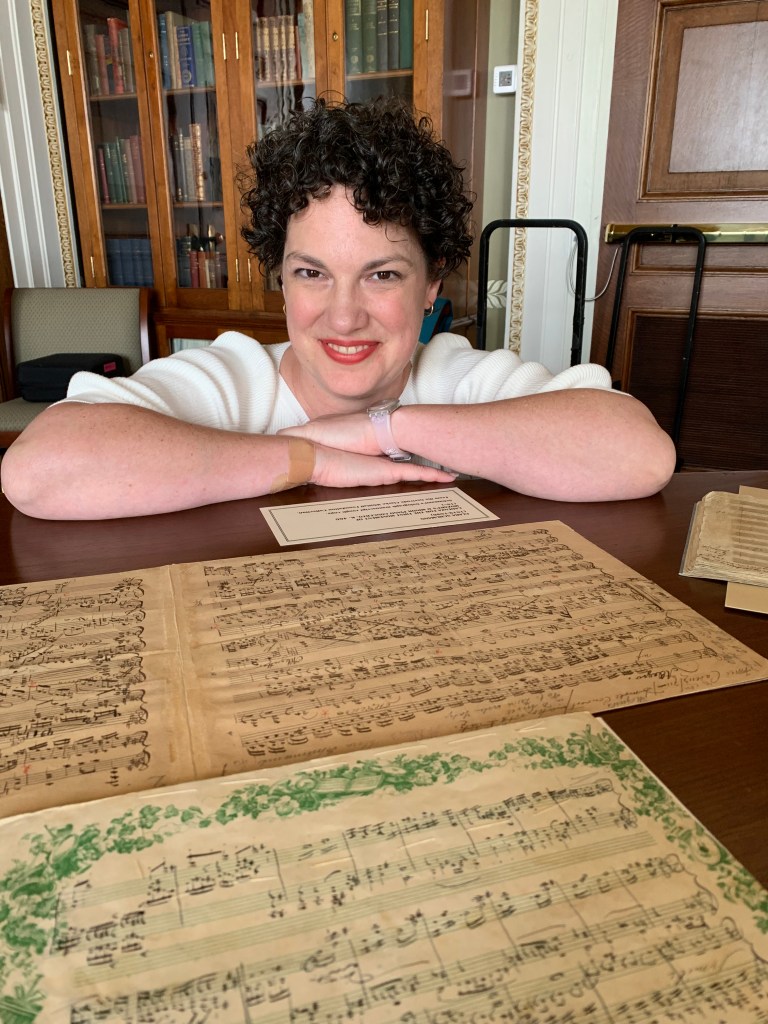


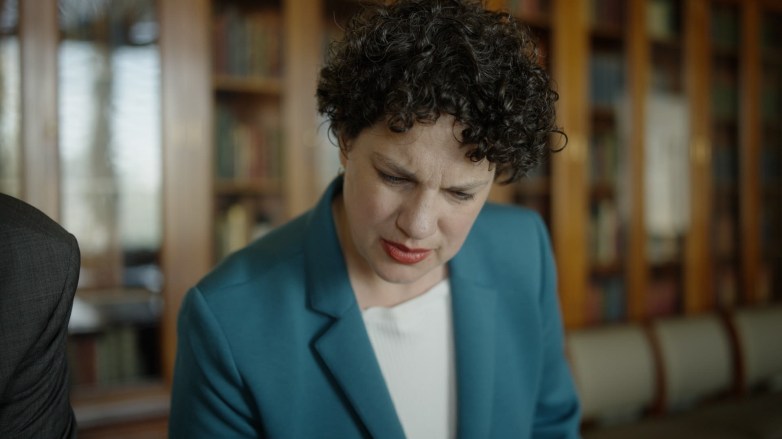
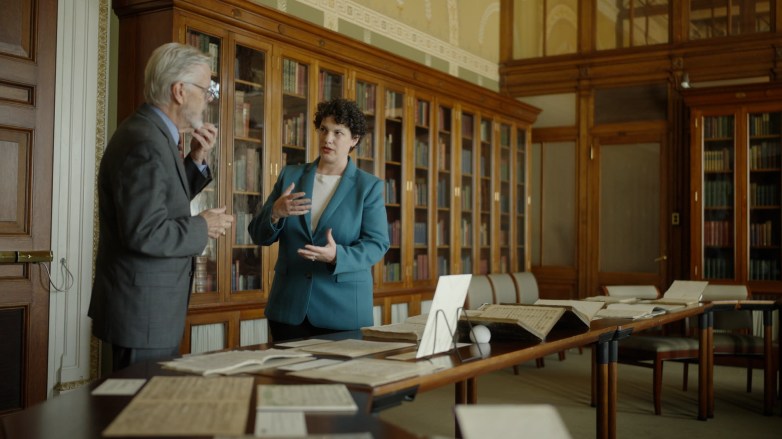
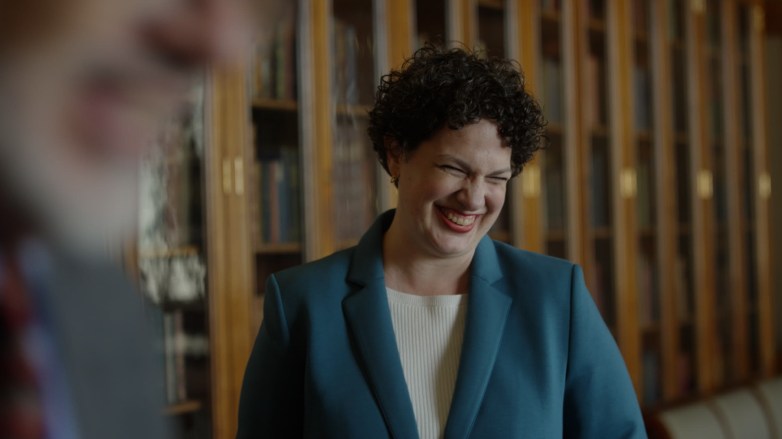
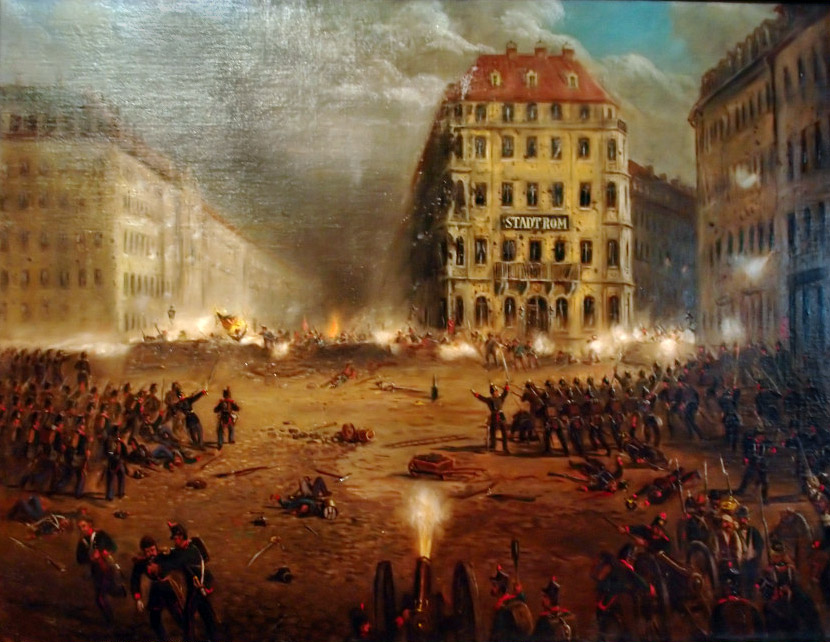


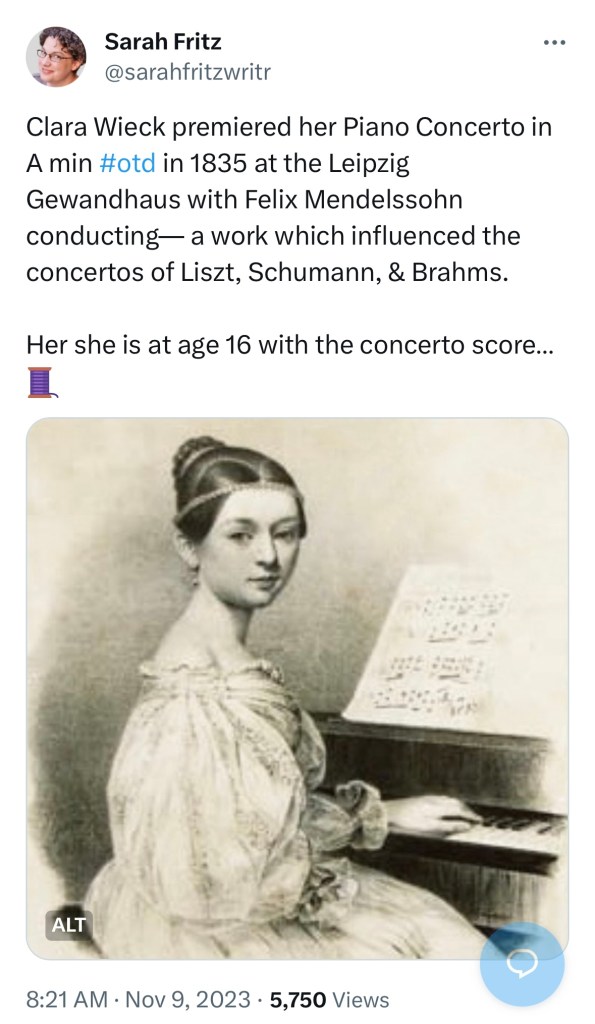


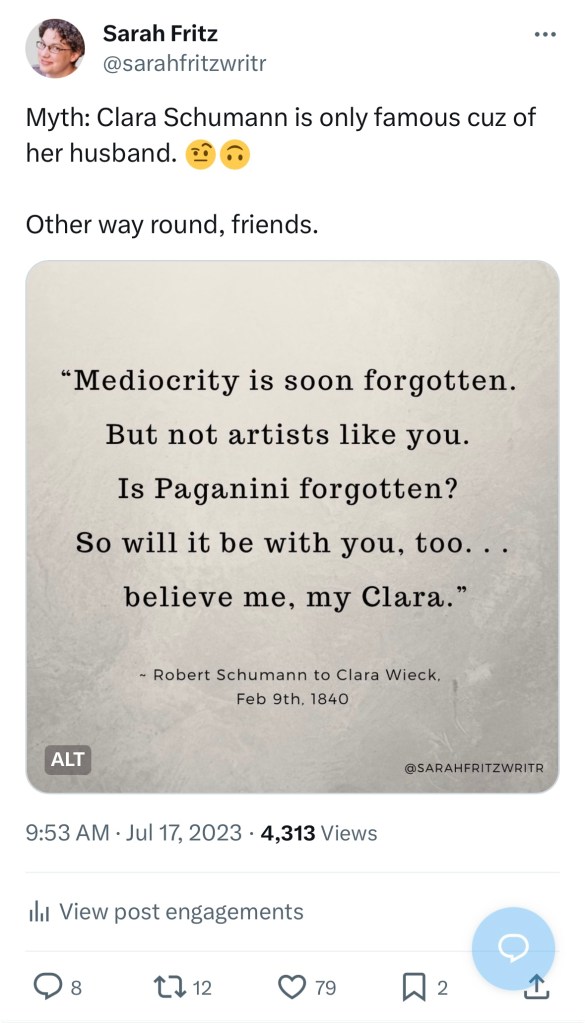
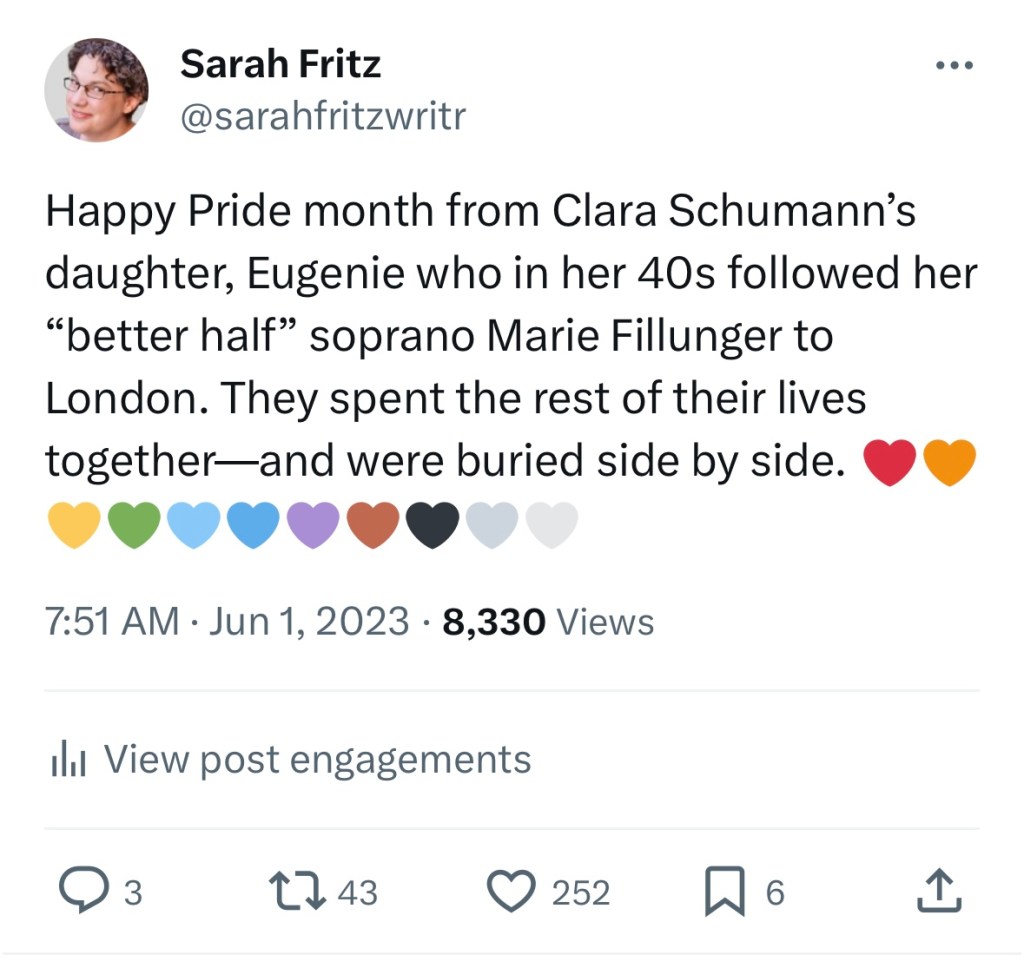

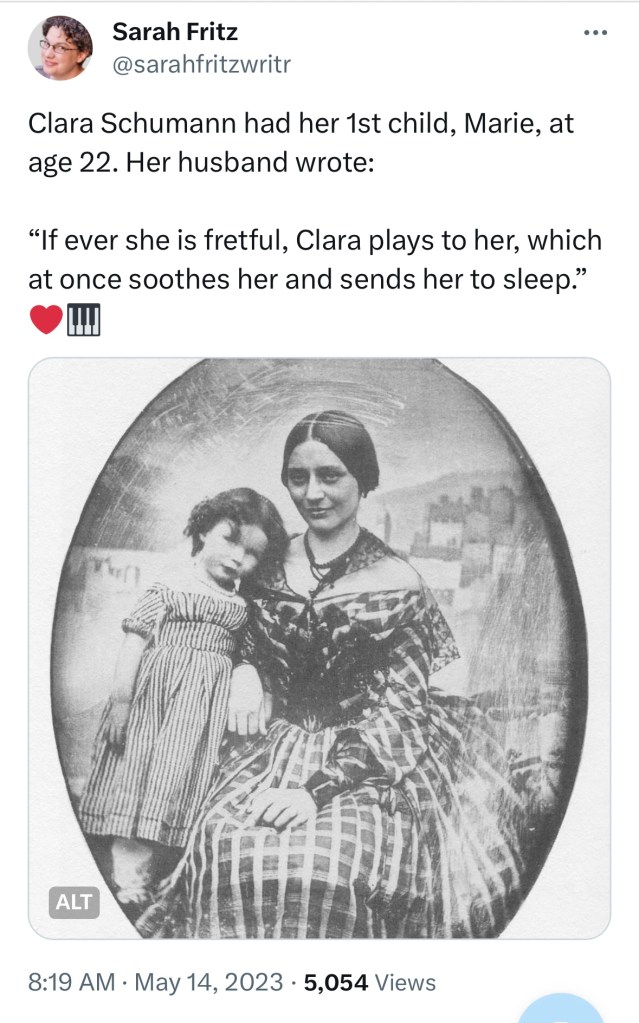

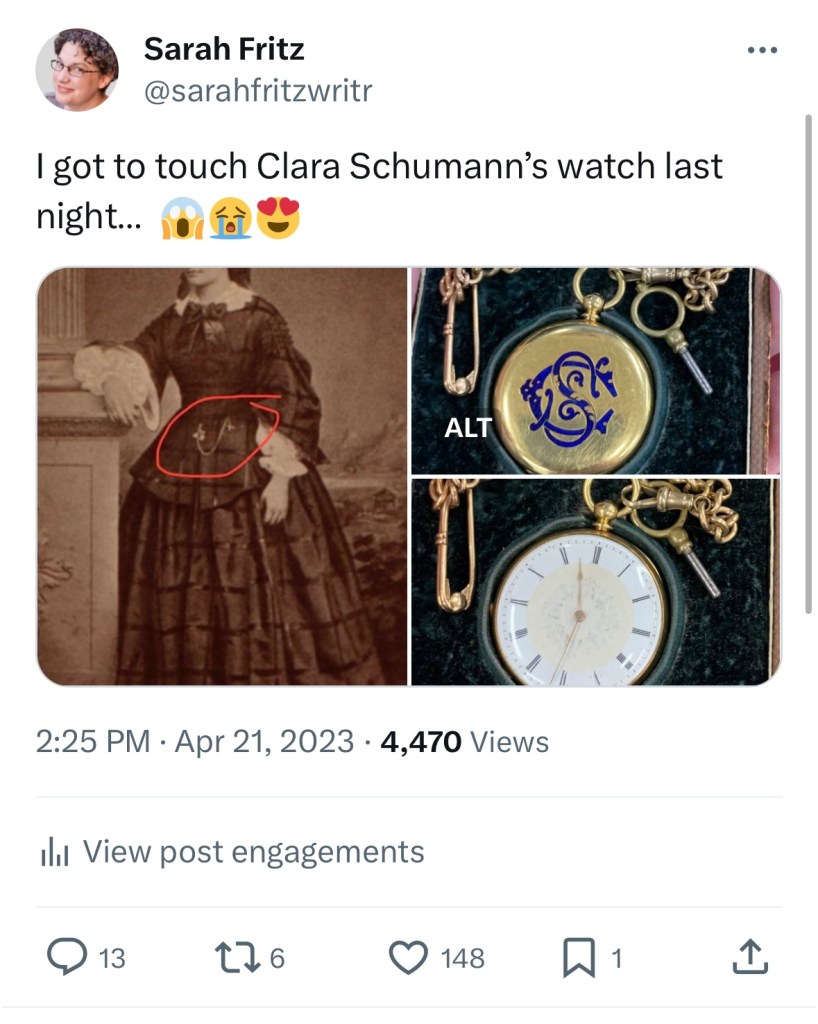
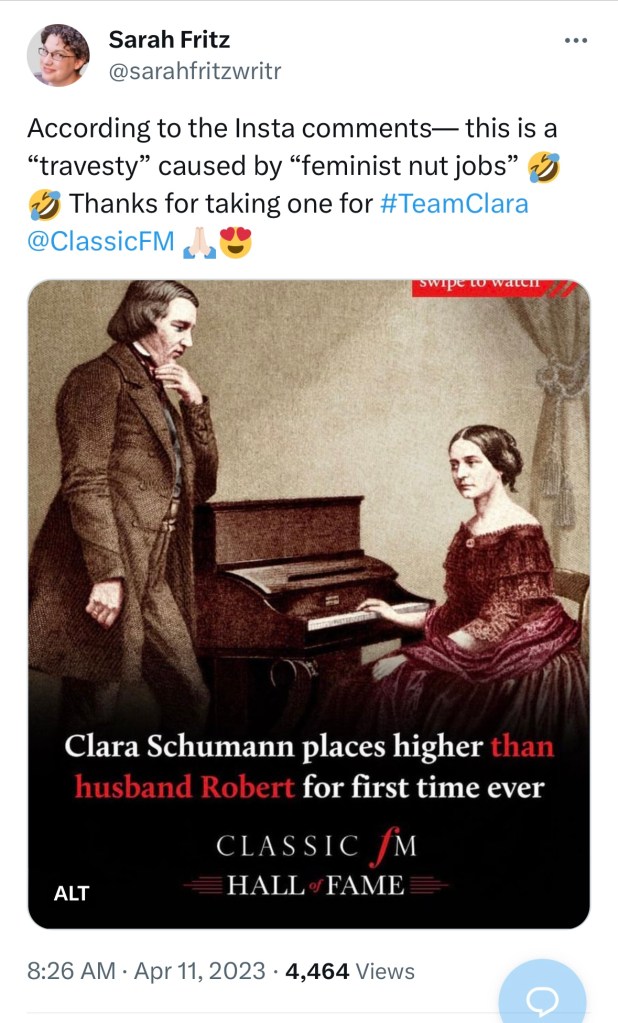
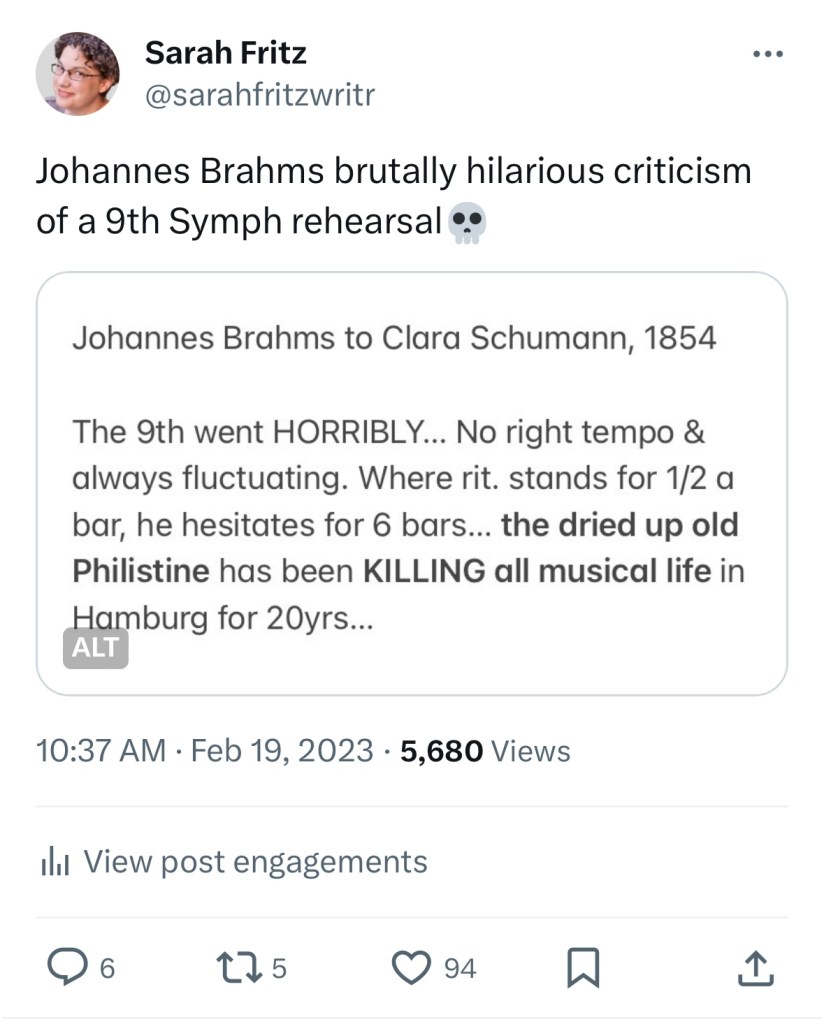
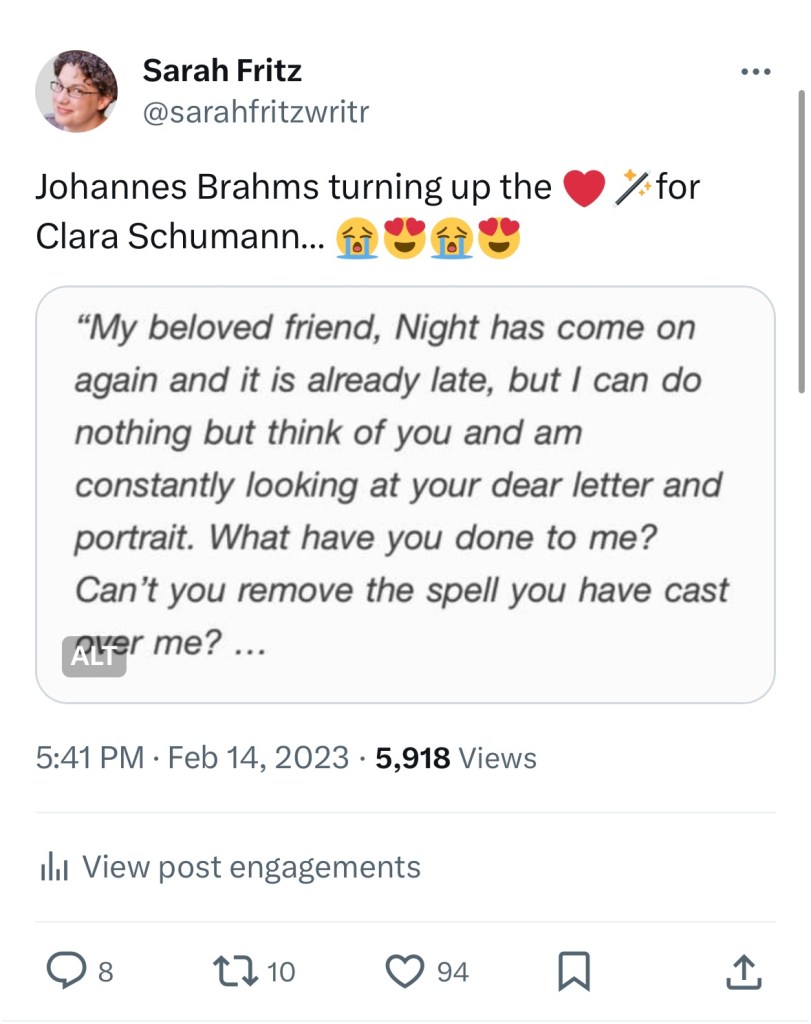
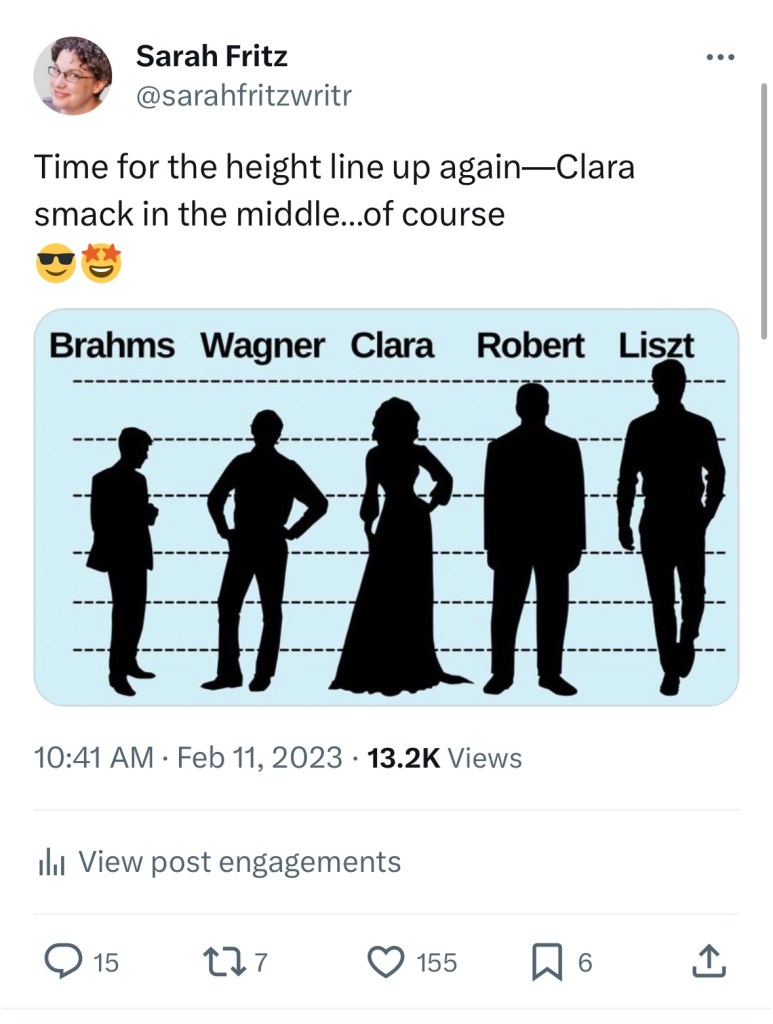
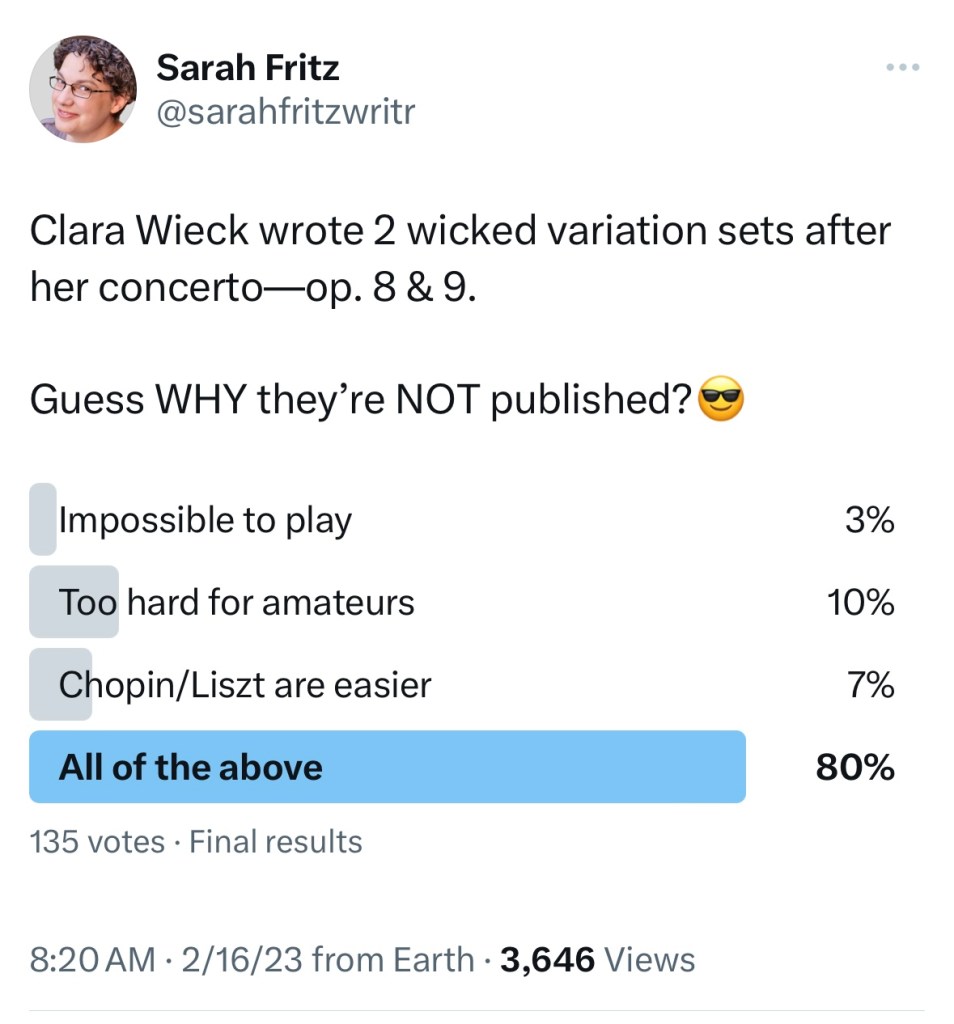
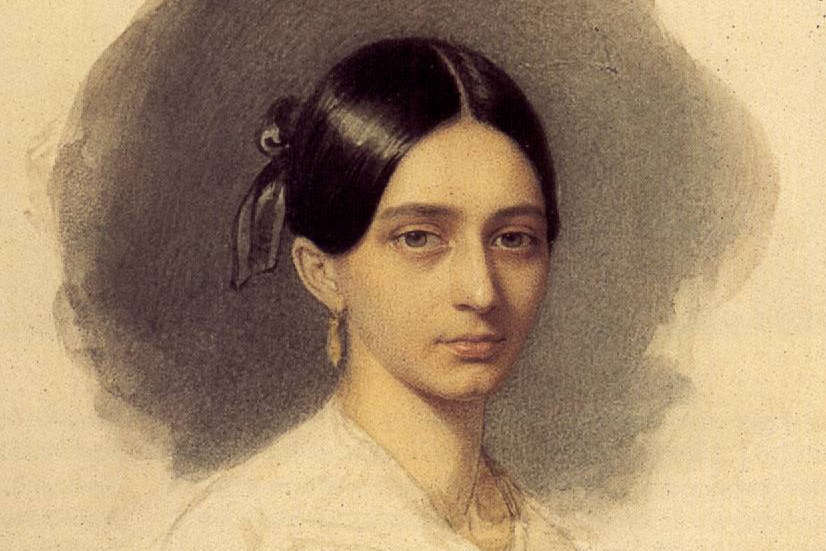


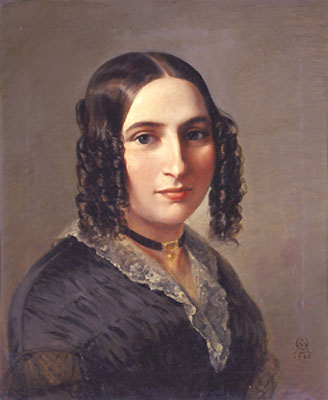
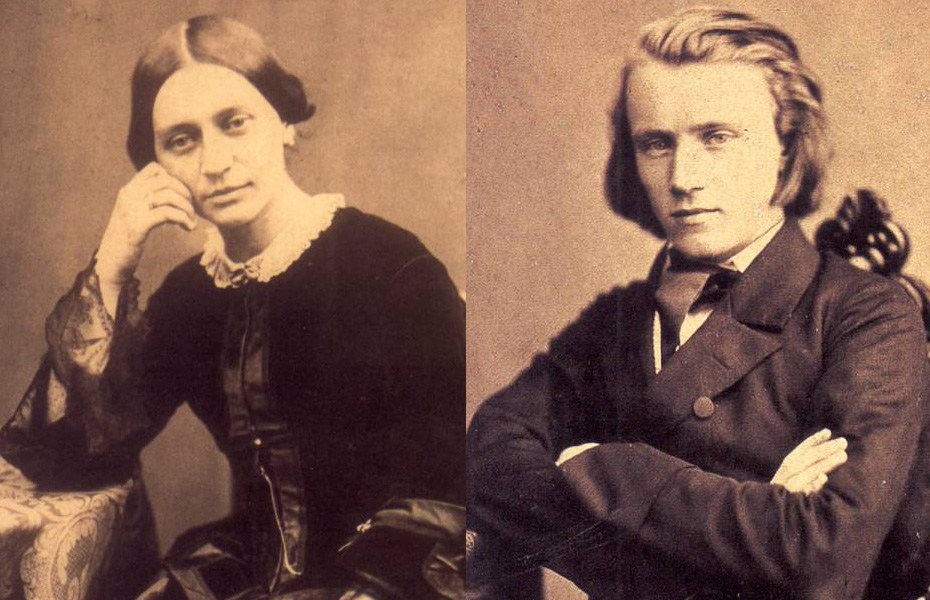


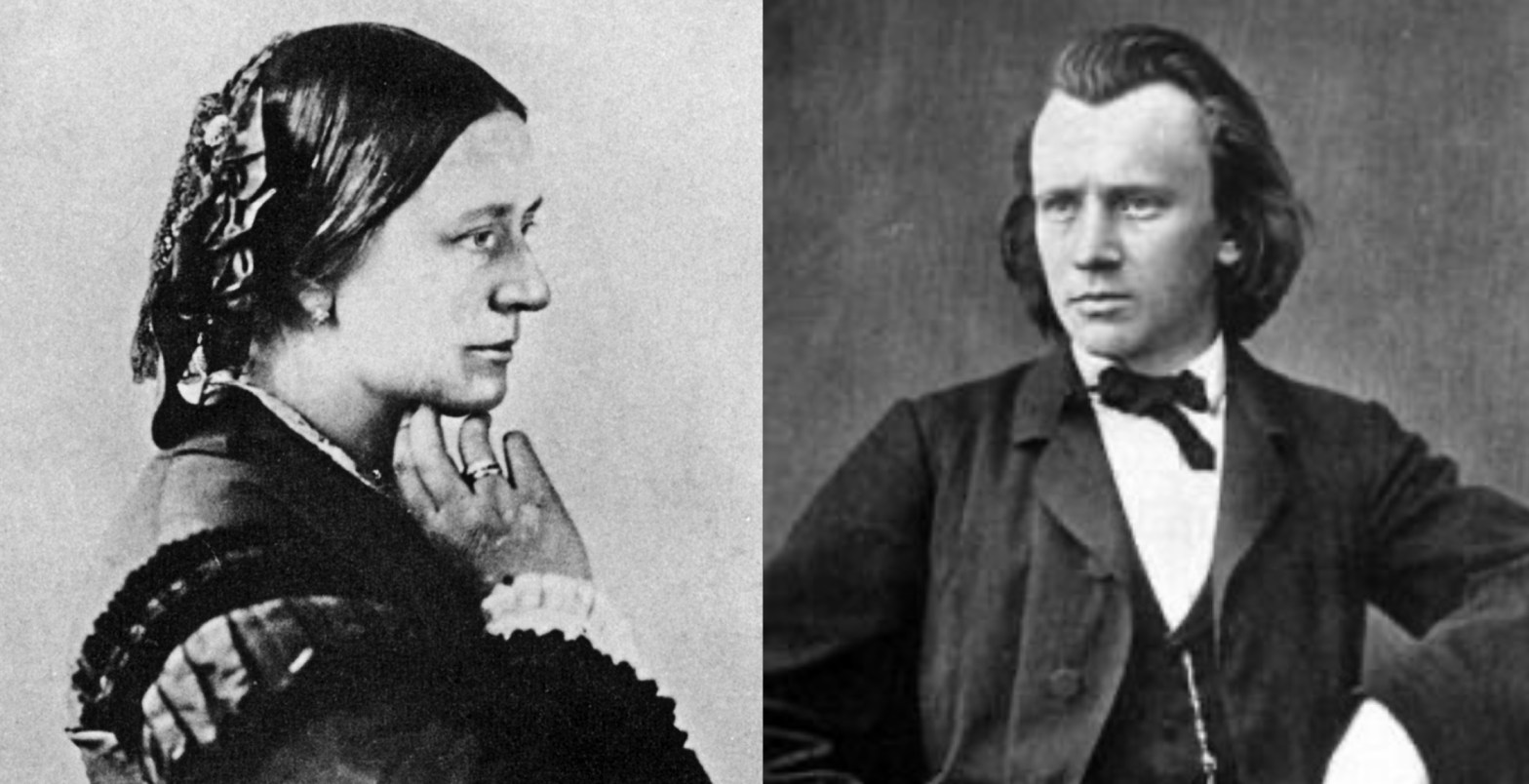
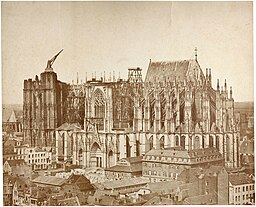
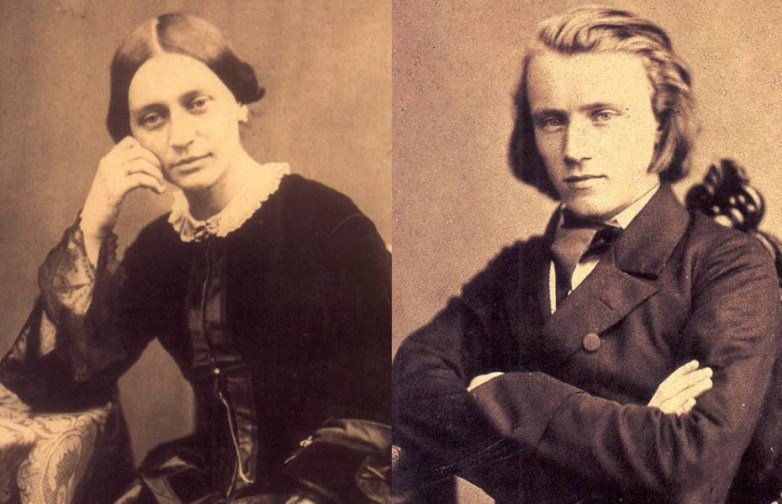


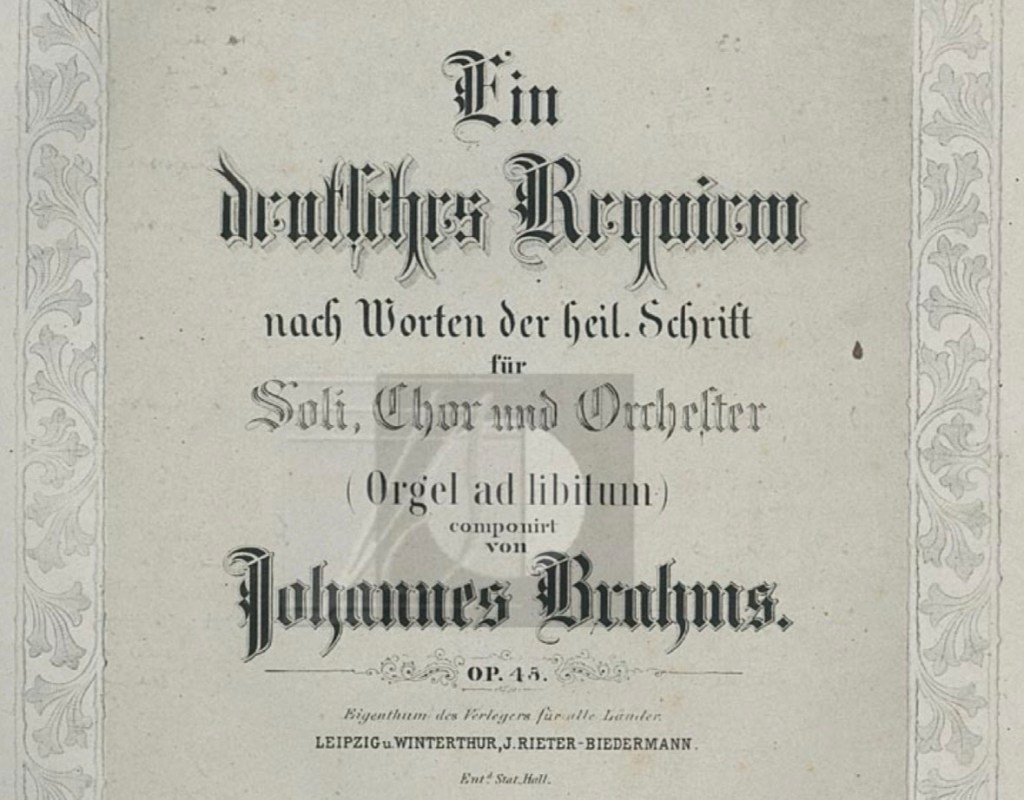

 The Clara Schumann Channel